

Hanumanji Free-to-Play Review for EN 365
Hanumanji is reviewed here as a fictional free-to-play entertainment concept for EN 365, not as a real-money casino product. The page focuses on visual design, mobile comfort, interface clarity, symbolic theme quality, and responsible non-cash gameplay. There are no deposits, withdrawals, cash rewards, paid upgrades, or financial outcomes in this review model.
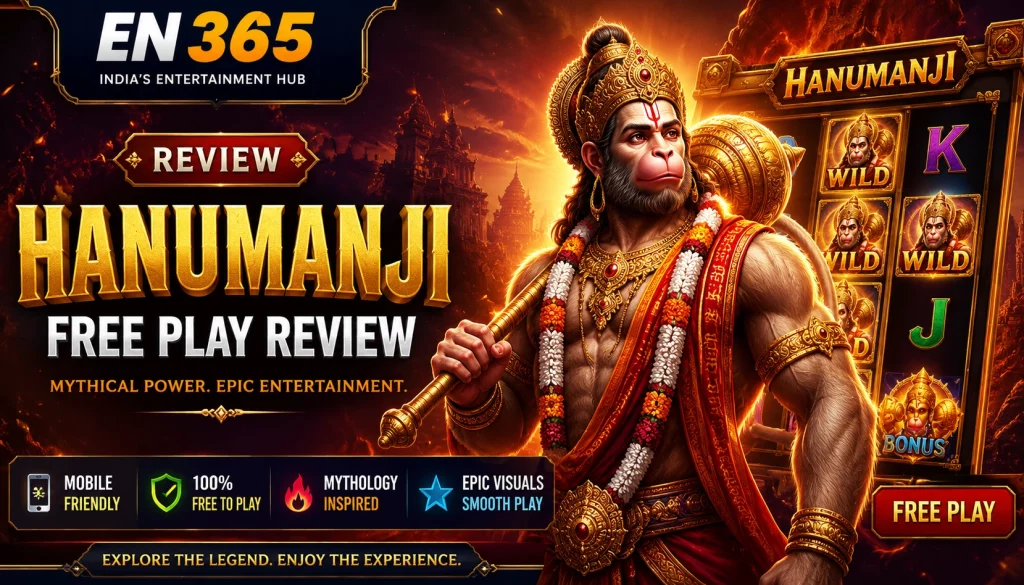
The concept is built around a strong Indian mythological theme, so presentation matters more than aggressive mechanics. A respectful Hanuman-inspired visual style should feel powerful, disciplined, and clear rather than overloaded. Warm orange, deep red, gold, and midnight blue can create a strong atmosphere, but the design should avoid visual noise. The best version would use symbolic strength, temple-inspired shapes, glowing borders, and clean icon spacing without turning the screen into a chaotic promotional panel.
From an editorial perspective, Hanumanji should be judged by how honestly it communicates its purpose. A free-to-play page becomes weaker when it borrows real-money language or makes casual entertainment feel like a financial opportunity. For EN 365, the stronger approach is to explain exactly what the user can expect: a themed visual experience, simple interaction, readable mobile layout, and no monetary risk.
First Impression and Theme Direction
The first impression of Hanumanji should be direct. The user should immediately understand that this is a mythology-inspired entertainment review with a clear non-cash structure. The title, opening screen, and visual layout should avoid ambiguity. If the page includes a Login reference as part of wider EN 365 navigation, it should not suggest that account access is required for deposits or paid gameplay in this specific concept.
The theme can work well because Hanuman symbolism naturally supports ideas of strength, focus, protection, and endurance. Those ideas translate into design language without needing pressure mechanics. A strong interface could use bold frames, flame-like highlights, mountain silhouettes, temple columns, and powerful icon shapes. The result should feel energetic but still controlled.
A weaker version would exaggerate everything at once: too many animations, flashing rewards, oversized buttons, and unclear labels. That would make the experience look artificial. Hanumanji needs restraint. The visual tone should be intense, but the user flow should remain calm and readable.
Free-to-Play Access and User Clarity
The access model should be transparent from the start. Hanumanji, in this review format, is a free-to-play concept only. A Sign up mention can exist as a general site-navigation term, but the article should not frame registration as a gateway to paid action. If account features are used at all, they should relate only to preferences, display settings, or saved non-financial progress.
The same rule applies to Bonus language. In this safe version, there is no real bonus, no deposit promotion, and no redeemable offer. If the word appears on the page for internal linking, it should be clearly separated from Hanumanji’s free-to-play review. The article should never imply that users can claim value from this concept.
Mobile access also matters. If EN 365 has an App section, Hanumanji should still be presented as a lightweight visual entertainment page that can be understood through a browser-first review. The user should not feel forced toward downloads, payments, or identity checks. Clean access is part of the trust structure.
Gameplay Style Without Stakes
Hanumanji can use slot-style visual motion, but it should not be presented as a real-money slot. The safer and clearer description is a symbolic round-based visual game. The user starts an animation, watches icons move, and receives a non-financial result state. That result may trigger visual effects, decorative progress, or score-style markers, but it should not represent cash value.
This distinction is important because many Slots pages online blur entertainment language with financial expectation. Hanumanji should not do that. The review should explain the experience as visual interaction only. Its value comes from atmosphere, pacing, and clarity, not from payout claims.
The same applies to the broader Games category. Hanumanji can sit within a casual free-to-play entertainment section, but it should not be framed as a product for betting. The article should keep the line visible: this is a fictional review of a non-cash concept.
Popular Free-to-Play Style Titles for Indian Users
For comparison, Indian users often recognise several visual game styles in casual or demo-like environments. These examples should be treated only as theme references, not as real-money recommendations:
- Mythology-inspired visual games with gods, temples, flames, and gold effects
- Adventure-style games with explorer symbols and simple animated rounds
- Festival-themed visual games with lights, lamps, coins, and celebratory patterns
- Fruit-style classic games with simple symbols and quick visual feedback
- Card-inspired casual games based on familiar Indian table-game visuals
- Grid-based colourful games focused on animation rather than financial outcomes
Hanumanji fits most naturally into the mythology-inspired category. Its strongest advantage is thematic identity. If the page uses that identity with discipline, the concept can feel memorable without becoming aggressive.
Navigation, FAQ and Links Structure
A polished EN 365 page should support the article with clear navigation. A later FAQ block can answer practical questions about the free-to-play format, mobile use, non-cash structure, and responsible entertainment boundaries. That helps readers understand the concept quickly without scanning the full review again.
The Links section should also be handled carefully. External links, where needed, should point to responsible digital-safety or official Indian information resources, not to conversion pages. The article should remain informational and editorial rather than promotional.
The main quality standard is consistency. If Hanumanji is free-to-play at the beginning of the page, it must remain free-to-play throughout the article. No section should suddenly introduce claims about real rewards, payments, or urgent participation. That consistency is what makes the review feel trustworthy.
Session Flow and Mobile Experience
Hanumanji becomes stronger when the session feels controlled rather than overstimulating. A free-to-play concept does not need constant prompts, urgent labels, or exaggerated effects to keep attention. Its quality should come from how naturally the user can enter, understand the screen, complete a short visual round, and leave without friction.
The ideal session rhythm is compact. A user should be able to open the page, understand the non-cash format, start a visual sequence, see the result clearly, and continue only if they want to. That structure respects casual browsing habits, especially for Indian mobile users who may access entertainment pages during short breaks or on variable network connections.
Mobile performance should remain a primary standard. Hanumanji would lose credibility if the theme looked impressive on desktop but became cramped on a phone. Large tap areas, readable icon shapes, stable loading, and clear contrast matter more than heavy animation. A refined mobile layout should keep the main interaction area central and move secondary controls into simple, easy-to-reach positions.
The concept also benefits from quiet confidence. Instead of filling the page with repetitive excitement language, the review should explain how the interface behaves. Does it load quickly? Are controls obvious? Does the theme stay readable during animation? Does the page keep the free-to-play boundary visible? These are the details that make the article feel expert rather than generic.
The chart frames Hanumanji as a non-cash entertainment concept. Mobile comfort and low-pressure design score highest because they define whether the experience feels responsible and usable. Theme quality is important, but it should support the interface rather than overpower it.
Visual Energy Without Pressure
Hanumanji should feel energetic, but energy does not need to become pressure. This distinction matters because mythology-inspired games often use strong colours, dramatic symbols, and fast motion. Those elements can work well if the interface remains calm. The player should feel that the screen is alive, not that the page is pushing them forward.
A good design rhythm would use intensity in selected moments. For example, the opening animation may include a short glow, flame effect, or symbolic transition. The main round animation can then stay simpler, allowing the user to follow the symbols clearly. Result states should be readable and brief. When every movement is treated as a climax, the experience becomes tiring.
Sound should follow the same principle. Percussion, bells, or atmospheric tones can support the Hanumanji identity, but they should be optional and easy to mute. Many mobile users browse in shared environments, so forced sound is a practical weakness. A respectful interface lets the user control the sensory layer.
The best version of Hanumanji would therefore feel powerful but not intrusive. It would give the theme enough force to be memorable while keeping the experience easy to understand. That balance is what makes a free-to-play concept feel professional.
Accessibility and Readability
Accessibility should be part of the design from the beginning. Hanumanji uses a visually strong theme, which means contrast and spacing need careful control. Gold and orange highlights can look impressive on a dark background, but small text in those colours may become difficult to read. The interface should reserve bright colours for emphasis and keep body text clean.
Buttons should be large enough for touch screens. Labels should use plain language. Icons should not rely only on decorative detail. A user should be able to recognise the main action, settings, information panel, and exit path without guessing. This is especially important on mobile, where small spacing errors quickly become frustrating.
Animation should not hide information. If symbols move too quickly or effects cover the screen, the experience becomes less accessible. Short animations with clear pauses are better than constant movement. The user should never feel that they missed something important because the interface moved too fast.
A responsible free-to-play design also gives users control over session length. There should be no artificial delay that makes leaving difficult. No repeated prompt should block the exit path. Hanumanji becomes more credible when the page respects attention rather than trying to capture it indefinitely.
Editorial Quality and Indian Audience Fit
For an India-oriented EN 365 page, Hanumanji needs a careful editorial tone. The theme may be familiar and culturally resonant, but that does not mean the article should become exaggerated. A credible review should describe the visual structure, interface behaviour, and responsible boundaries with precision.
The Indian audience context also makes mobile performance especially important. Many users will judge the page through loading speed, text clarity, and whether the layout adapts well to smaller screens. Heavy assets may look attractive but damage usability. The article should therefore support a lean, responsive version of the concept.
A good page should also avoid confusing entertainment with financial opportunity. This is where wording matters. Hanumanji can be described as vivid, symbolic, polished, smooth, and mobile-friendly. It should not be described as profitable, rewarding in a financial sense, or linked to claimable value.
That editorial restraint helps the page feel more authoritative. Instead of chasing conversion language, the article reads like a real assessment of a digital entertainment product. For EN 365, that is the correct direction: specific, controlled, and useful.
Design Depth and Symbol Structure
Hanumanji becomes more convincing when the visual system has discipline behind it. A strong theme is not only about bright colours or recognisable symbols. It depends on hierarchy, spacing, contrast, and how naturally the screen guides attention. For this fictional free-to-play concept, the interface should feel powerful but still easy to read.
The main visual identity can use flame accents, gold borders, mountain silhouettes, temple-inspired geometry, and bold character-focused artwork. These elements suit the Hanumanji theme well, but they should not compete with the core interaction area. The central screen needs enough visual space for symbols, buttons, and result states to remain clear.
Symbol design is especially important. Primary icons should be large, recognisable, and visually distinct. Secondary icons can be softer and less dominant. This helps users understand the animation quickly, even when they are using a smaller mobile screen. If too many symbols share the same colour or outline style, the experience becomes visually crowded.
A polished free-to-play page should also avoid making every result look dramatic. Small visual outcomes can stay simple, while stronger visual moments can use glow, movement, or short celebratory effects. That creates rhythm. Without this structure, the game becomes repetitive and tiring.
Mobile-First Editorial Testing
Hanumanji should be tested from a mobile-first perspective because that is where the page will prove its real quality. A desktop layout can hide problems. A phone screen exposes them immediately. If icons become cramped, if the action button is too close to secondary controls, or if the table forces horizontal scrolling, the page feels unfinished.
The review content should also remain readable on mobile. Long paragraphs need clear focus, not decorative filler. Each section should answer a specific question: how the theme behaves, how the interface responds, whether the page stays transparent, and whether the experience feels comfortable over time. This gives the article practical value.
Interactive components should follow the same rule. A vertical flow table works well because it does not rely on wide columns. Each card presents one evaluation point, so the user can scan the page naturally. This is better than compressing complex information into a rigid table that loses structure on smaller screens.
The strongest mobile version would feel lightweight. It would use responsive cards, readable contrast, and minimal animation around the article area. The game concept may look rich, but the page itself should not become heavy. Editorial usability is part of the full experience.
Responsible Entertainment and Tone Control
The tone of the Hanumanji page should remain controlled. It can be confident, descriptive, and visually rich, but it should not become promotional. Free-to-play entertainment does not need exaggerated claims. It needs clarity, context, and a useful explanation of what the user can expect.
Responsible entertainment positioning should be built into the article naturally. The page should explain that Hanumanji is fictional, non-cash, and reviewed as visual entertainment. That message should not appear only once in a small note. It should shape the full wording of the review.
The article should also avoid psychological pressure cues. No urgent wording, no limited-time framing, no “claim now” style phrasing, and no suggestion that the user is missing value by not continuing. A strong page respects the reader’s attention. That makes the content feel more mature and credible.
This restraint is especially important for an India-oriented page because online gaming terminology can be inconsistent across different platforms. A reader may see casual games, fantasy games, paid games, and casino-style content described with similar words. Hanumanji should remove that ambiguity by staying clear and disciplined.
How Hanumanji Can Stand Out
Hanumanji can stand out through identity, not pressure. The theme has enough strength to be memorable without requiring aggressive mechanics. A polished visual direction can combine heroic imagery, warm flame effects, bold icon shapes, and stable interface behaviour. That is enough to create interest.
The concept also has an advantage because it can focus on comfort. A free-to-play review can discuss pacing, accessibility, mobile quality, and visual hierarchy in more detail than a typical promotional page. That creates a more useful article. Instead of making vague claims, the review explains why the experience may feel smooth or why certain design choices matter.
Another point of differentiation is cultural tone. A respectful approach should avoid reducing the theme to decoration. Visual references should feel integrated into the concept, not pasted on for attention. This means using symbolic design carefully and avoiding overstatement.
When handled correctly, Hanumanji can feel like a premium casual entertainment concept. It does not need to copy real-money review structures. It becomes stronger when it builds its own editorial logic around transparency, design quality, and responsible free-to-play access.
Trust Signals and Final Assessment for This Section
Trust signals should be visible in both design and language. The article should clearly state the free-to-play nature of Hanumanji, avoid financial terminology, and use external references only where they support awareness or digital safety. A nofollow link to an official resource is useful when it adds context, but it should not distract from the review.
The page should also maintain consistency across all internal components. If the text says there are no cash outcomes, the table should not introduce wording that sounds like real rewards. If the review presents the concept as casual entertainment, the design blocks should not use high-pressure calls to action. Consistency is what makes the page trustworthy.
Hanumanji’s strongest direction is a balanced one. It can be visually intense but editorially calm. It can feel culturally inspired but not careless. It can use casino-style visual structure without encouraging real-money behaviour. This is the line that gives the page professional value.
As a free-to-play concept, Hanumanji has enough depth for a serious review because the evaluation is not based on betting mechanics. It is based on interface behaviour, responsible framing, mobile comfort, and theme execution. That makes the page suitable for EN 365 as long as the article stays clear, specific, and non-promotional.
Hanumanji Free-to-Play Assessment
Hanumanji works best as a fictional free-to-play entertainment concept when the page keeps its purpose clear from the first screen to the final paragraph. The review should not imitate a real-money casino article. Its value comes from design analysis, mobile usability, visual pacing, responsible wording, and transparent non-cash framing.
The strongest part of Hanumanji is its theme potential. A powerful mythology-inspired identity can create immediate recognition for Indian users, especially when the design uses flame accents, gold-orange highlights, bold icon shapes, and structured temple-style frames. However, the theme should support the user experience rather than dominate it. If the visuals become too crowded, the page loses clarity.
The final version should feel polished but not aggressive. Short sessions, clear controls, optional sound, readable symbols, and fast mobile loading are more important than constant animation. A free-to-play concept becomes more trustworthy when it respects the reader’s attention and avoids pressure-based design.
The chart shows the balance that Hanumanji should maintain as a free-to-play review topic. Theme identity is important, but it should not outweigh mobile comfort, clarity, and responsible structure. The best experience is not the loudest one; it is the one that feels stable, readable, and honest.
Practical Verdict on User Experience
Hanumanji should feel easy to enter and easy to leave. That is one of the clearest signs of responsible entertainment design. The page should never make the user feel locked into a loop, pushed toward action, or confused about what the visual results mean. Every interaction should remain voluntary and non-financial.
The strongest UX structure is simple. The main screen should contain a clear visual area, one primary action button, a settings option, and an information control. Anything beyond that should be treated carefully. Too many buttons weaken trust because they make the interface feel like a conversion funnel rather than a clean entertainment product.
Mobile behaviour should be tested under practical conditions. If the page works only on fast connections or large screens, it is not properly optimised. Hanumanji should feel stable on common smartphones, with compressed visual assets and responsive blocks that do not break the reading flow.
A polished version would use short visual rounds, clean symbol transitions, optional sound, and readable result states. The page should feel designed, not improvised. That is what separates an expert review from a thin description.
Responsible Language and Final Trust Signals
The language around Hanumanji should stay precise. Words that imply money, claims, financial rewards, or guaranteed value should not define the article. Better wording includes visual outcome, symbolic round, animation state, entertainment mode, session rhythm, and interface clarity.
Trust also depends on consistency. If the opening explains that Hanumanji is free-to-play, the tables, chart, and later content should support the same message. No block should introduce conflicting language. No CTA should imply a financial step. No external reference should lead readers toward risky behaviour.
The page can still sound engaging. It can describe strong visuals, smooth mobile use, rich atmosphere, and satisfying interface rhythm. The difference is that those qualities are framed as entertainment design, not as gambling value. That makes the content cleaner and more credible.
For EN 365, this positioning is useful because it creates a safer editorial standard. The article looks like a real review, not a promotional landing page. It gives readers enough information to understand the concept while keeping the boundaries visible.
Final Recommendation for Hanumanji
Hanumanji should be positioned as a fictional free-to-play visual entertainment review with a strong Indian-inspired theme and a strict non-cash structure. Its best qualities are visual identity, mobile comfort, and controlled pacing. Its main risk is overstating the experience or borrowing language from real-money casino pages.
The final recommendation is positive with clear conditions. Hanumanji can work well if the page keeps its free-to-play identity obvious, avoids pressure mechanics, and presents the theme respectfully. The article should continue to focus on usability, design quality, and responsible entertainment rather than financial mechanics.
A strong final page would feel vivid but disciplined. It would give readers a clear view of the concept, show how the interface behaves, explain why mobile clarity matters, and keep the user protected from misleading expectations. That is the best direction for Hanumanji on EN 365.
Hanumanji FAQ
This FAQ explains Hanumanji as a fictional free-to-play entertainment concept for EN 365, focusing on mobile comfort, visual design, responsible structure, and non-cash gameplay.






Comments