First Contact with the Game Environment
When I opened Bingo on EN 365, the immediate difference from other casino formats was the pacing, because bingo does not rely on rapid decisions or continuous betting, but instead operates through timed rounds where outcomes are revealed collectively, creating a shared experience rather than an individual sequence of actions.
The Login process is smooth and quick, which is important because bingo sessions are time-based, and missing the start of a round can disrupt the natural flow of gameplay, especially in rooms with scheduled draws.
Core Mechanics and Game Structure
Bingo is structurally simpler than most casino formats, but its simplicity hides a layered system of engagement, because while players do not control outcomes directly, they influence participation through ticket selection, number of cards, and timing.
The most common formats include:
- 90-ball bingo (traditional, longer sessions)
- 75-ball bingo (faster, pattern-based wins)
- Speed bingo (short rounds, rapid cycles)
Unlike Slots, where outcomes are isolated events, bingo distributes results across a shared pool of players, which creates a different type of engagement where timing and participation define the experience.
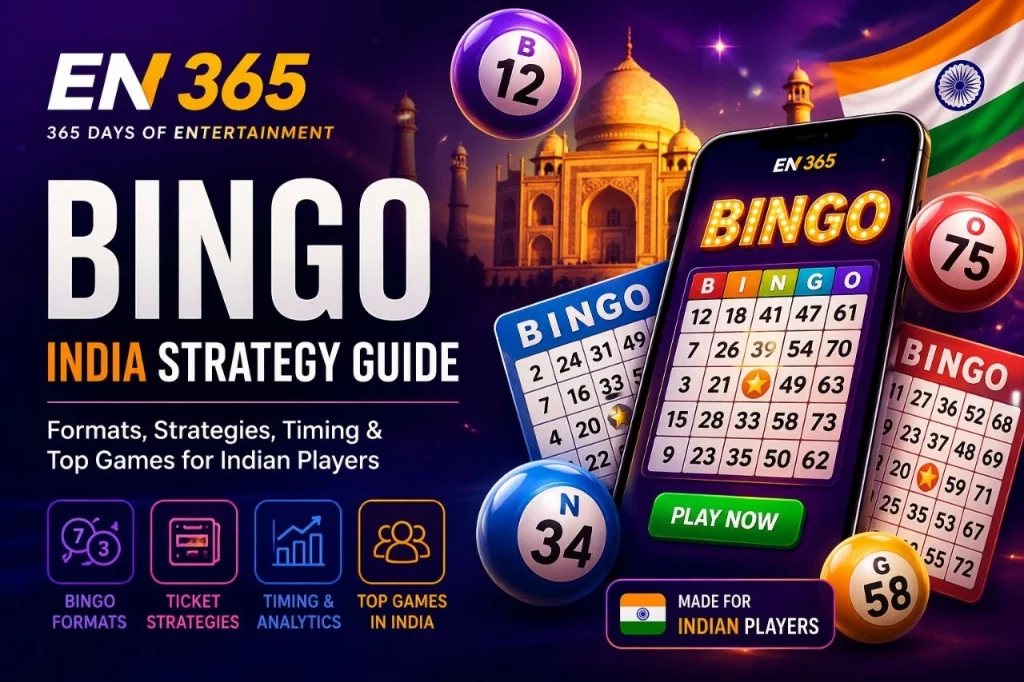
Behavioral Patterns in Early Sessions
After completing Sign up, I spent time observing how different bingo rooms operate, because each room has its own rhythm, and understanding that rhythm is more important than jumping into the first available round.
What becomes clear is that bingo is less about decision-making and more about session selection, because choosing the right room, ticket volume, and timing influences both engagement and potential outcomes.
This creates a system where preparation replaces reaction.
Bingo Formats
Gaming India and India Casinos Guide.| Format | Balls | Speed | Player Count |
|---|---|---|---|
| 90-Ball | 90 | Slow | High |
| 75-Ball | 75 | Medium | Moderate |
| Speed Bingo | Varies | Fast | Low–Moderate |
| Live Bingo | Varies | Medium | High |
Why Bingo Feels Social and Structured
Unlike most Games, bingo introduces a shared environment where players participate simultaneously, and outcomes are revealed collectively, which creates a sense of community that is absent in single-player formats.
The absence of a traditional Bonus system reinforces this structure, because engagement is driven by participation and timing rather than feature-based incentives.
Analytical Insight — Player Distribution
This distribution shows how most bingo participation comes from casual players, with a smaller segment engaging at higher volumes.
Positioning Within EN 365
Within EN 365, bingo serves as a slower-paced alternative to more intensive formats, and it is often accessed through internal Links by players looking for a more relaxed session structure that does not require continuous decision-making.
Interface Flow and Participation Rhythm
Continuing with Bingo on EN 365, the focus shifts from understanding formats to managing participation cycles, because bingo is structured around timed rounds where engagement depends on when and how players enter games rather than on continuous interaction.
The interface emphasizes clarity over speed, displaying countdowns, ticket availability, and room population in a way that allows players to plan their entry rather than react instantly, which creates a more deliberate rhythm compared to faster casino formats.
Session Timing and Ticket Volume
The most important variable in bingo is not bet size but ticket volume and timing, because each ticket increases the probability of hitting a winning pattern, but also raises total exposure per round, creating a balance between coverage and cost.
From extended observation, three patterns emerge:
- Low ticket volume maintains low exposure but limits win probability
- Medium ticket volume balances cost and coverage
- High ticket volume increases hit potential but reduces net gain per win
This creates a structural trade-off where players must decide whether to prioritize frequency or efficiency.
Interactive Table — Ticket Strategy Comparison
Behavioral Insight: Coverage vs Efficiency
One of the most important insights is that increasing ticket volume does not guarantee proportional returns, because while more tickets increase the chance of winning, they also reduce the relative value of each win due to higher total cost, making efficiency a key factor in long-term performance.
This creates a system where optimal play is not about maximizing participation but about balancing probability with cost.
Mobile Dynamics and Apk Performance
When playing through the Apк version, the experience becomes more fluid, allowing players to join multiple rooms and manage tickets more quickly, which increases overall participation but also introduces the risk of overextension, especially when managing several rounds simultaneously.
The speed of interaction can lead to higher engagement, but without careful control, it can also increase total exposure without noticeable changes in perceived activity.
Second Analytical Insight — Ticket Count vs Win Probability
This chart illustrates how win probability increases with ticket count, but not in a linear way relative to cost, reinforcing the need for balanced participation.
Strategic Role Within EN 365
Within EN 365, bingo acts as a structured participation-based format among Games, offering a slower and more controlled alternative to continuous betting systems, and it is often accessed through internal Links by players who prefer timed rounds over constant interaction.
Market Context and Player Behavior in India
Positioning Bingo within the Indian market requires understanding how players distribute their attention across formats, because bingo is rarely used as a primary engagement tool for long sessions and instead functions as a complementary format within a broader gameplay cycle.
On EN 365, I observed that players often enter bingo rooms between more intensive sessions, using it as a lower-pressure environment where outcomes are shared and timing replaces constant decision-making, which creates a natural break in cognitive load while still maintaining engagement.
This behavior aligns with the mobile-first nature of the Indian market, where users prefer flexible entry points and shorter interaction bursts rather than continuous gameplay loops.
Popular Games Among Indian Players
Here is a structured overview:
- Bingo — timed, participation-based gameplay
- Poker — competitive, decision-driven format
- Blackjack — strategic card game
- Roulette — probability-based table game
- Teen Patti — regionally dominant card format
- Andar Bahar — rapid-cycle gameplay
- Starburst — low-volatility slot
- Gonzo’s Quest — cascade-based slot
- Sweet Bonanza — high-volatility cluster slot
- Dead or Alive — feature-driven high-risk slot
This distribution highlights how players rotate between formats to manage both engagement and mental effort.
Interactive Table — Game Comparison
| Game | Type | Volatility | Session Role | Reference |
|---|---|---|---|---|
| Bingo | Participation | Low–Medium | Relaxed play | Gaming India |
| Poker | Skill-based | Variable | Strategic core | India Casinos |
| Blackjack | Table | Low–Medium | Decision control | Gaming India |
| Roulette | Table | Low–Medium | Stability anchor | India Casinos |
| Sweet Bonanza | Slot | High | High-risk play | Gaming India |
| Live Bingo | Live | Low–Medium | Interactive sessions | India Casinos |
Structural Comparison Across Game Types
What distinguishes bingo from most Games is the absence of direct control over outcomes, because players do not influence results through decisions but through participation, which creates a system where timing and ticket selection replace strategic action.
This makes bingo fundamentally different from both skill-based formats and probability-driven table games, positioning it as a hybrid between passive and active gameplay.
Role of Bonuses and Incentives
When testing bingo under an active Bonus, the effect was primarily related to extended participation rather than increased payout potential, because bonuses allow players to enter more rounds or purchase more tickets, but do not influence the outcome of any individual draw.
This reinforces the idea that bingo engagement is driven by volume and timing rather than by single-event impact.
Navigation and Internal Structure on EN 365
Within EN 365, bingo is positioned as a secondary engagement layer within the broader ecosystem, and players often access it through internal Links when transitioning from more intensive formats to a more relaxed environment where gameplay is structured around rounds rather than continuous action.
The platform supports this by maintaining consistent navigation and allowing players to move between formats without losing context.
Behavioral Insight: Rotation Strategy
A consistent pattern observed across sessions is that players integrate bingo into rotation cycles rather than relying on it exclusively, using it as a buffer between higher-intensity formats.
A typical rotation looks like this:
- Begin with decision-based or high-focus gameplay
- Move to bingo for reduced cognitive load
- Transition to higher-risk formats for engagement
- Return to bingo for stabilization
This cycle reflects how players manage both mental effort and session pacing.
Why Bingo Remains Relevant
Despite the dominance of faster and more complex formats, bingo remains relevant because it offers a structured, time-based experience that reduces decision pressure while maintaining engagement, making it an essential component of a balanced gameplay strategy.
Structured Session Control on EN 365
Working with Bingo at an advanced level requires shifting focus from passive participation to structured planning, because even though players do not influence individual outcomes, they control how often they participate, how many tickets they use, and which rooms they enter, and these variables define long-term performance.
On EN 365, I approached bingo sessions with predefined limits, including number of rounds, ticket allocation per session, and room selection criteria, because without these boundaries participation can expand naturally due to the continuous availability of games, increasing exposure without noticeable changes in engagement.
This transforms bingo from a casual activity into a system where participation is managed rather than driven by impulse.
Risk Management and Cost Efficiency
The most important factor in bingo is cost control, because increasing the number of tickets increases the probability of winning but also reduces efficiency if the cost grows faster than the potential return, and this creates a balance where players must decide between maximizing coverage and preserving value.
I maintained moderate ticket levels and avoided over-expansion into multiple rooms simultaneously, because spreading participation too widely can dilute focus and increase total cost without significantly improving overall outcomes.
This becomes even more relevant when playing via the Apк version, where fast navigation between rooms makes it easy to join additional games without fully evaluating their value.
Dual-Card Interactive Strategy Table
Balanced Participation Strategy
Focuses on moderate ticket counts within a single room to maintain efficiency and control.
- Ticket Count: 3–5
- Session Length: 20–30 min
- Risk Level: Low–Medium
- Best Use: Consistent sessions
- Reference: Gaming India
High Coverage Strategy
Increases ticket volume to maximize probability of winning within fewer rounds.
- Ticket Count: 6–10
- Session Length: 15–25 min
- Risk Level: Medium–High
- Best Use: Short aggressive play
- Reference: India Casinos
Multi-Room Strategy
Distributes tickets across different rooms to increase exposure to multiple draws.
- Ticket Count: Variable
- Session Length: Flexible
- Risk Level: High
- Best Use: Broad participation
- Reference: Gaming India
Low Exposure Strategy
Limits participation to a minimal number of tickets to control cost and reduce variance.
- Ticket Count: 1–2
- Session Length: Flexible
- Risk Level: Low
- Best Use: Casual play
- Reference: India Casinos
Behavioral Insight: Participation vs Control
One of the most important insights in bingo is that participation does not equal control, because while players can increase their involvement by buying more tickets or joining more rooms, they cannot influence the outcome of any individual draw, and this creates a dynamic where over-participation can lead to higher costs without proportional benefits.
Understanding this distinction allows players to structure sessions around efficiency rather than volume.
Platform Integration and Navigation Flow
Within EN 365, bingo functions as a participation-based layer among Games, offering a structured alternative to continuous interaction formats, and it is often accessed through internal Links when players want to shift into a more relaxed environment without leaving the platform ecosystem.
The navigation system supports this by allowing easy movement between rooms and formats, maintaining continuity while adapting to different session goals.
Analytical Perspective
From a system perspective, bingo represents a unique model where outcomes are shared, timing replaces decision-making, and participation defines engagement, making it fundamentally different from both strategy-based and probability-driven formats.
Its value lies in its simplicity and structure, because while it does not offer direct control over results, it provides a controlled framework for participation, which makes it an effective component of a balanced gameplay strategy when used with discipline and clear session planning.
FAG
What is Bingo and how does it work?
Bingo is a timed game where numbers are drawn randomly and players match them on their cards to complete specific patterns and win prizes.
Is Bingo based on luck or skill?
Bingo is primarily based on luck, as outcomes depend on random number draws, but strategy can influence participation and cost efficiency.
Do I need to complete Login before playing?
Yes, you need to complete the Login process to join real-money bingo rooms, although some platforms may offer demo access.
Can I Sign up and start playing immediately?
Yes, after you Sign up, you can usually join bingo rooms quickly and participate in the next available round.
Is Bingo suitable for Bonus wagering?
Bingo can contribute to Bonus wagering, but progress is usually steady rather than fast, since winnings are distributed across rounds.
Can I play Bingo on mobile or Apк?
Yes, Bingo is fully optimized for mobile devices, and the Apк version allows smooth participation in multiple rooms.
How does Bingo compare to Slots?
Unlike Slots, Bingo is based on shared participation and timed draws, rather than continuous individual spins.
Are there similar Games to Bingo?
Yes, games with timed rounds or shared participation formats offer a similar experience, but Bingo remains unique in its structure.
Where can I find useful Links about Bingo in India?
You can explore trusted sources such as gamingindia.org and indiacasinos.in for guides and updates related to Bingo.
Does this article include helpful FAQ answers?
Yes, this section is designed to provide clear FAQ answers so players can quickly understand key aspects of Bingo.






Comments