Safe Gambling Tips India
Safe Gambling Tips India: Responsible Play Starts With Limits
Safe gambling is not about finding a better system, a smarter pattern, or a stronger prediction method. It is about reducing risk before money, emotion, and fast digital access start influencing decisions. For Indian players, this topic is especially important because India’s Promotion and Regulation of Online Gaming Act, 2025 places a clear ban on online money games and frames user protection as a central policy issue.
A responsible player should never treat gambling as income, investment, debt recovery, or emotional relief. If a person feels pressure to open a Login page, chase a loss, or continue because of stress, the safest action is to stop before the session begins. Safe gambling depends on distance, limits, and the ability to walk away.
Treat Gambling as Optional Entertainment Only
The first safe gambling rule is simple: money used for gambling should be money the person can lose without affecting rent, food, transport, education, bills, family support, savings, or debt repayment. If losing that amount creates stress, the limit is already too high.
A Bonus should never change that boundary. Promotions can make spending feel less risky, but they do not remove financial exposure. A safe player keeps the same spending limit regardless of any offer, countdown, reward, or campaign.
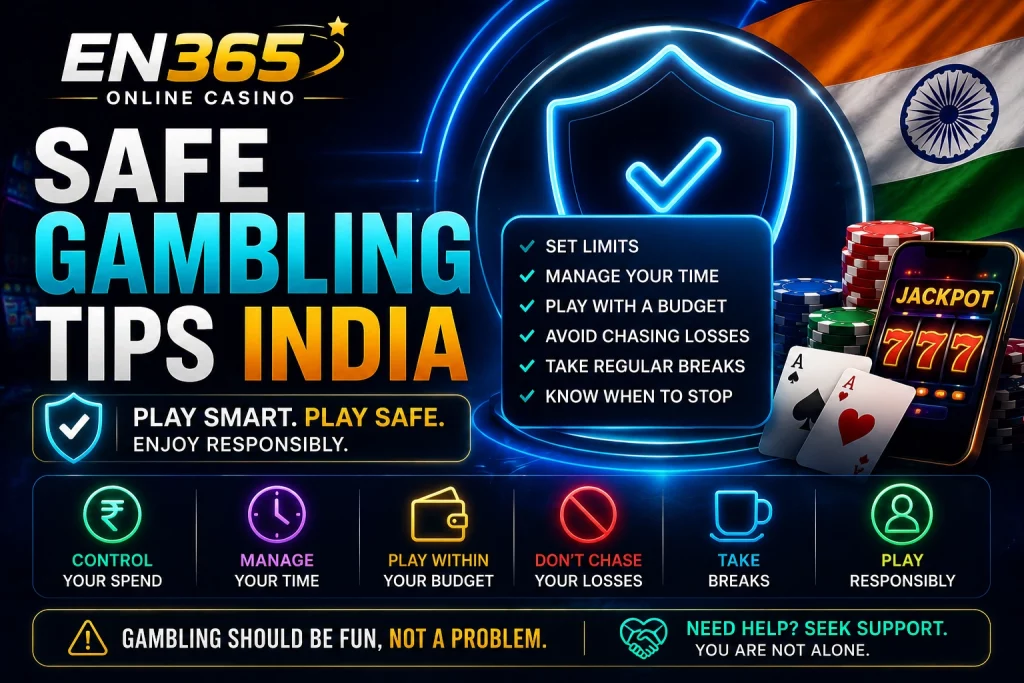
Decide the maximum spend and maximum time before any session begins. Never increase limits after losing.
Do not continue when angry, stressed, tired, bored, or trying to recover previous losses.
Tele MANAS provides national mental health support in India and may be relevant when gambling connects with stress, anxiety, or loss of control.
Visit Tele MANASOfficial Indian government updates explain the current legal direction around online money games and user protection.
Read PIB updateKnow When Safe Play Is No Longer Safe
Safe gambling stops being safe when the player hides activity, borrows money, skips responsibilities, increases deposits after losses, or feels unable to stop. In those cases, the correct step is not another session. It is account blocking, financial protection, and support.
Tele MANAS is described as a 24/7 Indian tele-mental health service with toll-free access and multilingual support, which can be relevant when gambling causes emotional distress or loss of control.
Responsible Navigation on EN 365
EN 365 should present responsible gaming information before users reach risky behaviour. Account pages, payment pages, app guides, and game guides should all connect to safer play resources.
The safest internal structure is not to push users deeper into gambling content. Instead, EN 365 should help readers understand limits, self-exclusion, support options, and financial boundaries before any gambling-related decision is made.
Managing Risk Before Mobile Play Begins
Safe gambling becomes much harder when access is instant. On mobile, a player can move from boredom, stress, or curiosity into gambling activity within seconds. This is why safe gambling tips for Indian players should focus on prevention before the session starts, not only behaviour during the session.
A responsible player should create friction. That means no saved passwords, no automatic payment routes, no push notifications, and no gambling access during emotional moments. The more steps required before play, the more time the person has to decide whether gambling is still a safe choice.
The App environment needs special attention because it turns gambling into a phone habit. A user may open an app while travelling, before sleep, during work breaks, or after a stressful message. If gambling is becoming automatic, the app should be deleted or blocked.
Safe play depends on control. If access feels too easy, the system is already weak.
Safe gambling starts before the first tap. The player should decide whether gambling is appropriate at all, especially if stress, boredom, or financial pressure is present.
Safe play should stop immediately when the player notices pressure, secrecy, repeated deposits, or a desire to continue beyond the original boundary.
Why Chasing Losses Is the Main Red Flag
Chasing losses is the point where gambling stops being controlled entertainment. It happens when the player continues because they want to recover money already lost. At that moment, the next decision is shaped by pressure rather than calm judgment.
A safe gambling plan should treat loss chasing as a hard stop. If the player feels the urge to recover, double back, or continue “just until even,” the session should end immediately. No safe gambling rule works if the player keeps changing the boundary after a loss.
Chasing can also appear quietly. It may not always look like one large deposit. Sometimes it appears as several smaller deposits, each one explained as the final attempt. This is why reviewing the total amount matters more than remembering individual payments.
If chasing happens repeatedly, the player should not rely on tips. Stronger tools such as self-exclusion, payment blocks, app removal, and outside support are more appropriate.
Safe Gambling Requires Clear Game Boundaries
Different formats create different risks. Fast-result games can increase repeated decisions. Longer sessions can distort time. Live formats can create social pressure. Promotional screens can make spending feel less direct. A safe player understands these differences before choosing any gambling activity.
The Games section should therefore be treated as information, not as encouragement to keep browsing. Browsing can become a trigger when the player keeps searching for a title that feels lucky, overdue, or easier to win. Safe gambling means setting a browsing time limit as well as a play limit.
Players should also avoid gambling when they are using it to change mood. Gambling should not be used to escape stress, repair boredom, recover money, or feel in control after a bad day. These emotional reasons increase risk because the session carries pressure from the beginning.
The safer rule is simple: if the reason to play is emotional, financial, or urgent, the player should not play.
Recognising When Safe Play Is Turning Unsafe
Safe gambling depends on honest self-observation. A player may begin with limits, rules, and controlled expectations, but the session can still become unsafe if emotions change. The strongest warning signs are not always dramatic. They often appear as small shifts: checking the balance too often, extending the session, increasing the stake, hiding activity, or thinking about the next chance to recover.
The clearest risk sign is pressure. If a player feels that they must continue, must win back money, must use another offer, or must keep playing because the session feels unfinished, gambling has moved into unsafe territory. Safe play should feel optional. Once it feels necessary, the correct action is to stop.
A player should also watch for secrecy. If gambling activity needs to be hidden from family, friends, or partners, the behaviour already carries conflict. Safe gambling does not require concealment. If secrecy appears, a support step is more useful than another session.
The safest practical rule is to stop at the first serious warning sign rather than waiting for a larger loss. Early stopping protects money, mood, and decision-making.
The player continues because they want to recover money already lost. This is one of the strongest signs that the session should end immediately.
Increasing spending, time, or stake limits during play usually means emotion is controlling the decision.
If gambling activity feels secret or uncomfortable to explain, the behaviour has already moved beyond relaxed entertainment.
Long sessions, late-night play, tired decisions, and gambling during stress all weaken control and increase risky choices.
Building Safer Habits Around Game Choice
A safer gambling habit begins before selecting a game. The player should already know how much time is available, how much money can be lost without harm, and what stop signal will end the session. Without these rules, the game choice can become emotional.
Fast-result formats require stricter control because decisions repeat quickly. Slower formats require time control because sessions may continue longer than expected. Any game type can become unsafe when the player is chasing, bored, angry, tired, or trying to repair a previous result.
Browsing Slots or other gambling categories can also become part of the risk pattern. A player may believe they are only looking, but repeated browsing can trigger the desire to play. Safe gambling means recognising that exposure matters, even before deposits happen.
The best habit is to decide limits before seeing the lobby. Once the player is already inside a gambling environment, the ability to choose calmly may be weaker.
Why Safe Gambling Must Include Money Separation
Safe gambling is impossible if essential money and gambling money are mixed. A player should never use funds meant for rent, food, education, loan payments, transport, medical needs, savings, or family responsibilities. If gambling money is not clearly separate, the risk is already too high.
A responsible player should define a small entertainment budget and keep it isolated. If losing that amount would create stress, shame, or a need to win it back, the amount is not safe. The correct response is to reduce the limit or stop entirely.
Money separation also helps reveal patterns. If gambling spending keeps crossing into essential funds, this is no longer casual entertainment. It is a warning sign that stronger tools may be needed, such as self-exclusion, financial supervision, or support.
EN 365 should present money separation as a basic safety principle, not advanced advice. It is one of the simplest ways to prevent gambling from damaging real-life responsibilities.
When Safe Gambling Tips Are Not Enough
Safe gambling tips are useful only when the player can follow them. If the player repeatedly ignores limits, hides gambling, borrows money, chases losses, or returns after promising to stop, advice is no longer enough. The correct next step is stronger protection.
That may mean self-exclusion, account closure, payment blocking, device-level restrictions, or help from a trusted person. A player should not keep collecting tips while continuing the same harmful pattern. The behaviour should determine the level of protection.
If a person has tried to stop several times and keeps returning, the issue should be treated seriously. A support conversation, financial review, and access block may be more effective than another attempt at “controlled play.”
Safe gambling includes knowing when not to gamble. In many situations, the safest choice is a full stop.
Turning Safe Gambling Into a Long-Term Routine
Safe gambling is not a single decision made at the beginning of a session. It is a routine that must stay active before, during, and after play. Indian players who want to reduce risk should review their limits, emotional state, payment behaviour, and time use regularly. If those checks stop happening, gambling can gradually become automatic again.
The strongest safe gambling routine starts before access. The player decides whether gambling is appropriate today, checks whether essential money is protected, and confirms a clear time boundary. If the person feels stressed, tired, angry, lonely, or financially pressured, the safest decision is not to play.
After a session, the player should review what happened without excuses. Did the session end on time? Was the spending limit respected? Did the player feel pressure to continue? Did gambling affect sleep, mood, work, study, or family responsibilities? These questions are more useful than focusing only on win or loss.
A safe routine should become stricter whenever warning signs appear. If the same boundary is ignored repeatedly, the correct response is stronger protection, not another flexible promise.
Do not gamble to escape stress, recover losses, handle boredom, prove control, or respond to emotional pressure.
Goal: avoid risky motivationDecide the time limit, spending limit, and stop point before any gambling-related page or account area is opened.
Goal: protect decisions before exposureEnd the session if chasing, secrecy, frustration, repeated deposits, or pressure to continue appears.
Goal: prevent escalationUse self-exclusion, payment controls, app removal, or support services if ordinary limits are repeatedly ignored.
Goal: move from advice to protectionHow EN 365 Should Present Safe Gambling Information
Safe gambling information should be easy to find, direct, and connected to the rest of the site. The FAQ section should answer practical questions about limits, self-exclusion, chasing losses, emotional play, and when to stop completely.
The Links section should guide users toward official updates, mental health support, responsible gaming education, and protection tools. These resources should not be hidden behind promotional navigation or treated as secondary content.
EN 365 should also place safety reminders near account, app, payment, and game-related pages. Players should not need to search separately for harm-prevention information after risk has already appeared. Safer play guidance should be present before decisions are made.
This type of structure makes the site more credible. A responsible site does not only explain gambling features. It also explains how users can reduce harm, stop access, and protect money when gambling stops feeling controlled.
Final Safe Gambling Position for EN 365
Safe gambling is not about confidence. It is about structure. A player can feel confident and still make risky decisions when tired, stressed, angry, or chasing losses. Limits, pauses, and support tools exist because human decision-making changes under pressure.
For Indian players, the safest approach is conservative. Use fixed limits, avoid emotional play, keep essential money separate, stop immediately after warning signs, and move to stronger protection if control becomes uncertain. If gambling affects real life, the responsible choice is not another session. It is distance.
EN 365 should present safe gambling as practical harm prevention. The page should not promise easy control or suggest that tips can solve every situation. Tips help when the player can follow them. When they cannot, self-exclusion and support become the safer answer.
The clearest rule is simple: gambling should never damage money, health, sleep, study, work, family life, or personal stability. If it does, stopping is the safest decision.






Comments