
Scam Casino Warning Signs India
Scam casino warning signs in India should be reviewed as part of broader online safety, not as a simple checklist of suspicious websites. Fraudulent gambling-related pages often look professional enough to mislead users at first glance. They may copy logos, use polished colours, imitate payment screens, publish fake reviews, or create urgent messages that pressure users into quick action. The danger is not only financial loss. Scam pages can also collect phone numbers, passwords, documents, payment information, and device data.
For EN 365, the safest editorial approach is to focus on recognition, prevention, and reporting. A user should know how to identify a suspicious site before sharing personal information. The most important red flags are unclear ownership, copied branding, missing privacy details, unrealistic promotional claims, fake support channels, poor payment transparency, and pressure-based communication.
In India, cybercrime reporting infrastructure is especially relevant when suspected financial fraud is involved. The National Cyber Crime Reporting Portal lists the Cyber Crime Helpline as 1930, and the Indian Cyber Crime Coordination Centre describes 1930 as the national helpline for reporting cyber financial frauds.
A legitimate platform should make safety information easy to find. A scam site usually does the opposite: it pushes users toward fast deposits, copied download links, vague promotions, or private chats. If the user feels rushed, confused, or pressured to share credentials, that is already a warning sign.
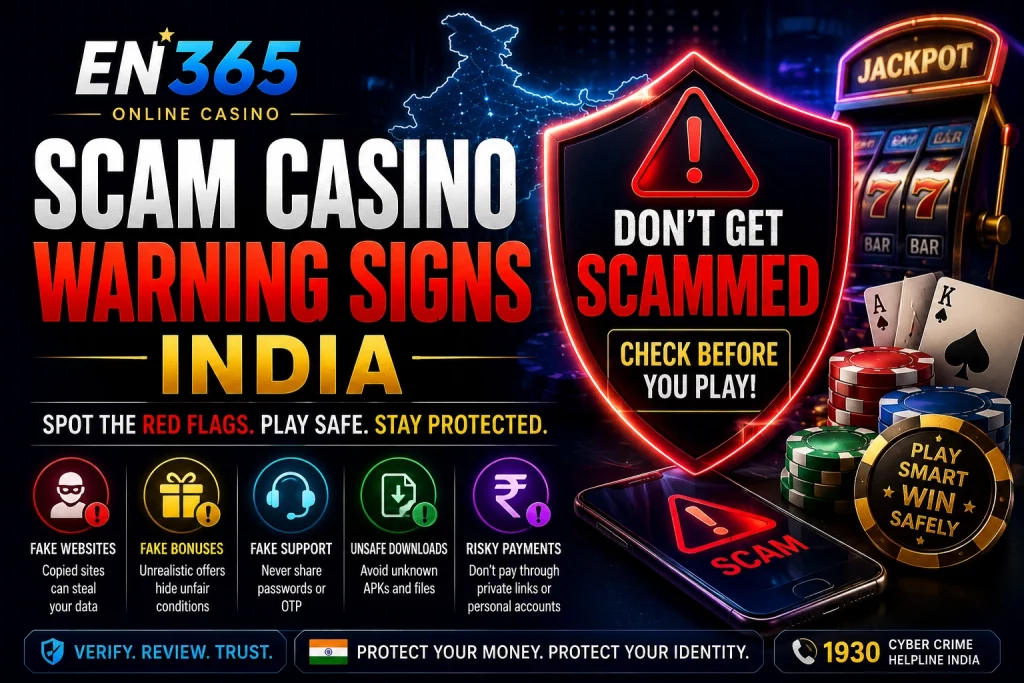
Unclear Ownership and Fake Branding
One of the strongest warning signs is unclear ownership. A safe platform should provide identifiable company information, privacy terms, contact details, payment policies, and user support routes. A scam site may avoid clear ownership or use generic claims such as “trusted worldwide” without evidence.
Fake branding is another common problem. Fraudulent pages may copy the look of a known brand but change the domain slightly. One extra hyphen, a misspelled word, a strange extension, or a copied landing page can be enough to deceive users. This is why users should never rely only on visual design.
The Login page is a high-risk area because fake sites often imitate it to capture credentials. Users should check the exact domain, HTTPS status, certificate warnings, and whether the page was opened through an official route. If the page appears from a random message, social media comment, or shortened link, the risk is much higher.
A scam page may also use stolen trust badges or fake security icons. A padlock image placed inside the design is not the same as a browser-verified secure connection. The real security signal appears in the browser address bar, not in decorative graphics on the page.
Unrealistic Offers and Pressure Tactics
Scam sites often use exaggerated offers to reduce caution. They may promise guaranteed winnings, instant high returns, no-risk play, unlimited rewards, or unusually large promotions with almost no conditions. These claims should be treated carefully because legitimate terms are usually specific, limited, and documented.
A suspicious Bonus message may be written to create urgency rather than clarity. It may tell users that an offer expires within minutes, that a payment must be made immediately, or that support can unlock a special reward through a private channel. Pressure is one of the clearest scam signals.
The problem is not only the size of the offer. The problem is the lack of verifiable detail. If terms are missing, hidden, contradictory, or written in vague language, users cannot judge the real conditions. Scam pages often avoid explaining withdrawal limits, account checks, verification rules, and dispute procedures.
Users should also be cautious when a page pushes them away from normal website navigation. If a message says to contact a “manager” on a private app, transfer funds manually, or download an unofficial file before using the service, the safer response is to stop.
| Warning Sign | What It May Indicate | Safer User Response | Official Safety Resource |
|---|---|---|---|
| Copied Domain | The site may be imitating a real brand to capture credentials or payment data. | Check spelling, HTTPS status, certificate warnings, and official navigation routes. | National Cyber Crime Portal |
| Private Payment Request | The user may be pushed outside controlled payment systems into an unsafe transfer. | Do not pay through random links, private chats, or unofficial account numbers. | Reserve Bank of India |
| Fake Support | A fraudster may be pretending to solve account or payment problems. | Never share passwords, OTPs, authentication codes, or full payment details. | Indian Cyber Crime Coordination Centre |
| Unverified Download | An unofficial app file may collect data, track the device, or imitate the original platform. | Avoid APK files or installers from unknown websites, chats, or social posts. | CERT-In |
Unsafe Payments and Withdrawal Confusion
Payment opacity is a major warning sign. A suspicious site may show vague deposit instructions, change payment details without explanation, or redirect users to unrelated pages. It may also claim that a withdrawal is blocked unless the user pays an extra fee, verifies through a private chat, or completes an urgent transfer.
A legitimate payment process should be predictable. Users should see clear transaction status, official payment routes, and documented rules. Scam pages often create confusion so users depend on fake support. The user may be told that a payment failed, that a manual correction is needed, or that a special processing fee must be sent quickly.
India’s digital fraud environment makes this risk important. RBI has continued to highlight digital fraud concerns and payment-safety measures, including stronger safeguards around unauthorised electronic banking transactions.
Users should treat unusual payment instructions as a stop signal. If the platform changes the route suddenly, asks for payment through personal accounts, or moves the conversation into private messaging, the risk becomes serious.
Fake Support and Social Engineering
Fake support is one of the most damaging scam patterns because it uses trust. A user may already be worried about a payment delay, account problem, or verification issue. A fraudster then appears with a fast solution and asks for sensitive information.
No legitimate support process should ask for passwords, OTPs, full card numbers, authentication codes, or unnecessary document copies. If a support contact requests these details, users should stop immediately and use official reporting or verified help routes.
CERT-In is India’s national cybersecurity incident response organisation, and its public resources are relevant for users checking cyber-safety guidance. Scam prevention depends on recognising that fraud is often psychological as much as technical. The message may sound helpful, urgent, or professional, but the request itself is what matters.
The safest rule is direct: never solve an account or payment issue through an unofficial chat, copied profile, or unknown support handle. Official help routes should be reached from the verified site only.
Scam Patterns During Registration and Account Setup
Scam casino sites often reveal themselves during the earliest account steps. A suspicious registration flow may ask for too much information before explaining why it is needed. It may request identity documents too early, push users to deposit before account terms are visible, or hide important rules until after the user has already shared personal details.
A safe Sign up process should feel structured, not aggressive. The platform should explain what information is required, why it is collected, and how account access will be protected. If a site immediately demands payment, document upload, or private contact through messaging apps, users should treat that as a warning sign.
Scam sites also use speed as a tactic. They try to reduce the time users spend checking the domain, reading terms, reviewing payment rules, or verifying support channels. The more pressure a page creates, the more carefully users should slow down.
A serious platform does not need to hide basic information. It should make privacy rules, payment rules, account conditions, and support contacts accessible before users commit sensitive information.
Scam Warnings Around App Downloads
Mobile access creates a specific scam risk in India because users may encounter copied download pages, unofficial APK files, fake update prompts, and social media posts pretending to offer faster access. A suspicious App page may look polished while still sending users to an unsafe file.
The main warning sign is distribution outside a verified route. If a page tells users to install a file from a chat, unknown mirror site, shortened link, or social group, caution is required. A fake app can collect credentials, read device signals, imitate payment screens, or redirect users to fraudulent support.
Scam apps often rely on urgency. The message may claim that the normal version is unavailable, that the user must update immediately, or that a special version includes extra rewards. These claims are designed to bypass normal checking habits.
Users should also inspect permissions. If an app requests access to contacts, SMS, storage, microphone, or unrelated device functions without a clear reason, that is a warning sign. A safe platform should not ask for broad permissions that do not match the service being used.
Unrealistic Reward Claim
A scam page may promise guaranteed returns, instant large rewards, or special access without explaining limits, eligibility, or withdrawal rules.
Check the Written Terms
Users should look for precise rules, visible limits, fair conditions, and official policy pages before sharing personal or payment information.
Private Support Request
Fraudsters may ask users to continue through private chat, share OTPs, send screenshots, or provide payment credentials outside the official platform.
Use Verified Contact Routes
Support should be reached only through official pages, verified contact details, or secure account areas. Passwords and OTPs should never be shared.
Unknown Download Link
A copied website may push users toward an unofficial installation file, fake update, or modified mobile package.
Reject Unverified Files
Users should avoid downloads from random pages, chats, or social posts and rely only on verified official routes.
Hidden Terms and Withdrawal Barriers
Hidden terms are one of the clearest signs that a platform may not be operating fairly. A scam site may advertise easy access but later introduce unclear withdrawal restrictions, unexplained fees, repeated verification demands, or impossible conditions.
The issue is not that platforms have rules. Rules are normal. The warning sign is when those rules are difficult to find, change without notice, contradict support messages, or appear only after the user has deposited funds.
Withdrawal barriers can also be used as pressure tactics. Users may be told that they must pay a release fee, tax, processing charge, or verification deposit before funds can move. This is a serious warning sign, especially when the payment is requested through unofficial channels.
A credible platform should explain payment timelines, verification requirements, restricted actions, and dispute routes before users commit. If those details are hidden or constantly shifting, users should not treat the platform as reliable.
Scam Signals in Game Pages
Scam pages can appear around entertainment categories as well as payment screens. A copied site may display fake provider logos, invented win claims, manipulated screenshots, or counterfeit versions of popular Games. The goal is to make the environment feel legitimate long enough for the user to register, deposit, or share data.
Users should be cautious when game pages load through strange domains, create unexpected pop-ups, or push downloads before access. Safe browsing should remain consistent from the homepage to account pages and content areas.
Another warning sign is exaggerated performance language. Claims such as guaranteed wins, fixed outcomes, or secret systems should not be trusted. Legitimate entertainment content should avoid promising results that cannot be verified.
Scam sites often imitate variety. They may list many categories, providers, and game names, but the underlying pages may be shallow, copied, or broken. A professional site usually has consistent navigation, clear policies, and working support routes, not just a large visual catalogue.
Why EN 365 Should Focus on Verification Before Trust
EN 365 should treat scam detection as a verification process. The central question is not whether a site looks attractive. The question is whether its identity, rules, payment flow, support routes, and security behaviour can be checked.
A trustworthy page should withstand basic inspection. The domain should be consistent. Policies should be accessible. Payment information should be clear. Support should not request credentials. Download routes should be official. Terms should not change depending on where the user clicks.
A scam page often fails when examined slowly. It depends on speed, urgency, visual imitation, and user distraction. The safest editorial message is therefore practical: slow down, verify the route, read the terms, avoid unofficial support, and never share private codes.
For Indian users, this approach is especially important because online financial fraud can move quickly. Early recognition is more effective than trying to recover after a scam has already collected payment data, identity documents, or account credentials.
Fake Reviews and Artificial Trust Signals
Scam casino pages often use fake reviews to create fast trust. These reviews may look detailed at first, but they usually repeat the same phrases, avoid specific evidence, or describe perfect experiences without any realistic detail. A genuine review environment normally includes mixed opinions, specific issues, payment timing notes, support experiences, and visible disagreement between users.
Artificial trust signals are also common. A scam page may display fake awards, copied badges, invented ratings, or logos of organisations that have no real connection to the site. These images are designed to create confidence before the user checks ownership, terms, or payment rules.
Users should treat perfect ratings with caution. If every review is extremely positive, every payment is described as instant, every support agent is praised, and no one reports delays or limits, the page may be curated or fabricated. Real platforms usually have some friction, even when they operate professionally.
A warning sign becomes stronger when fake reviews appear together with pressure-based offers. If the page claims that many users are winning, that access is limited, or that a special promotion must be claimed quickly, the content is trying to move the user toward action before verification.
Check the Domain First
Users should verify exact spelling, HTTPS status, certificate behaviour, and whether the page was opened through an official route rather than a random message.
Best signal: the address is consistent and independently verifiable.Review Terms Before Action
Payment rules, withdrawal conditions, verification expectations, and account restrictions should be visible before the user submits sensitive data.
Best signal: rules are clear before deposit or document upload.Reject Private Payment Pressure
Requests to send money through personal accounts, unofficial links, chat instructions, or urgent manual transfers should be treated as high-risk.
Best signal: all payments stay inside controlled official flows.Validate Support Channels
Support should be reached through verified pages only. Passwords, OTPs, payment authentication codes, and unnecessary documents should never be shared.
Best signal: help routes are official, consistent, and credential-safe.Slow Down Urgent Claims
Scam pages often push fast decisions through countdowns, fake limited access, exaggerated rewards, or warnings that the user must act immediately.
Best signal: the user can verify details without pressure.Suspicious Slot and Game Claims
Scam sites often use game-related promises to make users believe the platform is safer or more profitable than it really is. A page may claim that certain Slots are “fixed to win,” that a private strategy guarantees results, or that a special version of a game offers higher payouts than the official provider version. These claims should be treated as serious warnings.
A legitimate platform should not promise guaranteed outcomes. Casino-style games involve chance, and any page claiming certainty is usually using marketing pressure or deception. The user should be especially cautious when these claims appear together with deposit pressure, private links, or hidden terms.
Fake game pages may also use copied screenshots, provider logos, or animated interfaces to imitate real games. The page may look active while the underlying system is not connected to a legitimate provider. Users should check whether the platform identifies providers clearly and whether the game environment behaves consistently.
The warning signs become stronger if game access requires an unusual download, private invitation, or manual payment. Safe access should not depend on secret files, unofficial APKs, or support agents sending special game links.
Poor Language, Broken Pages and Inconsistent Details
Not every typo means a site is a scam, but repeated inconsistencies are worth noticing. Scam pages often combine copied text, machine-translated sections, broken menus, outdated contact details, and mismatched policy pages. These problems suggest that the site may have been assembled quickly rather than maintained properly.
Users should look for consistency across the full site. Company details should match policy pages. Payment rules should match support replies. Domain names should match email addresses. Terms should not contradict promotional messages. If every section tells a different story, the user should not trust the platform with sensitive information.
Broken pages are also a warning sign when they appear in critical areas. A broken privacy policy, non-working contact form, missing withdrawal terms, or empty help section should not be ignored. A platform that cannot maintain basic user information may also fail to handle disputes responsibly.
Scam sites often focus their effort on the homepage and promotional panels while leaving deeper pages unfinished. This creates an attractive surface with weak substance underneath. Users should always check beyond the first screen.
Unsafe Link Chains and Redirects
Redirect chains are a common scam technique. A user may click one link, pass through several shorteners, land on a copied page, and then be pushed to a different payment or download route. Each step reduces transparency and makes it harder to know who controls the page.
Official Links should be stable, readable, and easy to verify. If the path involves multiple unknown domains, shortened URLs, pop-up redirects, or sudden file downloads, caution is required. Legitimate platforms normally do not need to hide their access route behind confusing chains.
Redirects are especially risky when connected to payments or account recovery. A user may think they are correcting a payment issue or restoring access while actually entering credentials into a fraudulent form. Browser warnings, unfamiliar domains, and sudden interface changes should be treated seriously.
The safest habit is to avoid clicking sensitive links from messages. Users should open the official site directly, use saved bookmarks, or navigate from verified pages. If a link cannot be verified, it should not be used for account access, payment, or document submission.
EN 365 Editorial Standard for Scam Detection
EN 365 should present scam warning signs as practical user protection, not as fear-based content. The purpose is to help users slow down, check details, and avoid unsafe actions before personal or financial data is exposed.
A strong scam detection review should examine ownership, domain quality, payment clarity, support behaviour, security signals, terms visibility, download routes, and consistency across pages. No single signal proves everything, but several weak signals together should be treated as serious risk.
The strongest warning pattern is pressure combined with opacity. If a page asks the user to act quickly while hiding ownership, terms, payment routes, or support rules, the user should stop. Genuine platforms can usually explain how they work without forcing immediate action.
For Indian users, the safest approach is direct and practical: verify before sharing data, avoid private payment instructions, reject credential requests, use official reporting routes for suspected cybercrime, and never treat visual polish as proof of legitimacy.
What to Do When a Scam Is Suspected
When a user suspects that a casino-related page is fraudulent, the safest reaction is to slow down immediately. Scams often depend on urgency, confusion, and emotional pressure. The user may see a countdown timer, a warning that an account will be blocked, a message about a failed payment, or a claim that a reward will disappear unless action is taken quickly. These signals are designed to prevent careful checking.
The first step is to stop sharing information. Users should not enter passwords, OTPs, payment details, documents, screenshots, or personal identifiers if the page looks suspicious. They should also avoid replying to private messages that claim to be support, especially if the message asks for credentials or payment authentication codes.
The second step is to verify the route. The user should open the official site directly through a saved bookmark or typed address rather than through the suspicious link. If the same issue does not appear through the official route, the original message or page is likely unsafe.
The third step is to preserve evidence without exposing more data. Screenshots, URLs, timestamps, payment references, and message handles can help when reporting, but evidence should be shared only through official reporting channels or verified support routes. Users should avoid sending screenshots that reveal extra private details unless those details are necessary for the report.
Reporting Scam Casino Activity in India
If a user suspects cyber fraud, especially where money, payment details, identity documents, or account credentials are involved, reporting should happen through recognised channels. Random social media comments, unofficial chat groups, and unknown recovery agents can create additional risk.
The National Cyber Crime Reporting Portal is the central public route for reporting cybercrime in India, and the 1930 helpline is used for cyber financial fraud reporting. Users should provide accurate information, including URLs, transaction references, screenshots, messages, and timestamps where available.
If a bank, wallet, or payment provider is involved, the user should contact that provider through official channels as well. Fast reporting can matter when financial transactions are recent. Users should not rely on a scam page’s own support team to solve a suspected scam.
When documents are exposed, users should monitor related accounts and be cautious about follow-up messages. Fraudsters may attempt a second scam by pretending to help recover funds or remove data. Recovery scams are common because the affected user is already stressed and looking for urgent help.
Stop Interaction
Do not continue entering data, clicking payment links, replying to private messages, or downloading files from the suspicious page.
Secure Account Access
Open the official site directly, change passwords where needed, check active sessions, and avoid using links from the suspicious message.
Review Payment Activity
Check bank, wallet, or transaction records through official payment channels and contact the provider if an unauthorised transaction appears.
Preserve Evidence
Save URLs, screenshots, timestamps, payment references, and message handles without sharing them through random chats or unofficial contacts.
Report Through Official Routes
If money, identity data, or credentials may be affected, users should report through recognised cybercrime or financial support channels in India.
Monitor Future Signals
Users should watch for new login alerts, payment attempts, recovery emails, SIM-related issues, or messages pretending to follow up on the scam.
Safer Habits Before Trusting Any Casino Page
Users should build a checking routine before trusting any casino-related page. The routine should begin with domain verification. The address should be typed directly, bookmarked, or reached through a known official route. Random messages should not be used for account access.
The next step is policy review. A safer site should have visible terms, privacy details, payment rules, support information, and responsible-use guidance. A weak site hides these pages or fills them with vague text.
Users should also test support quality before sharing sensitive data. A legitimate support team will not ask for passwords, OTPs, payment authentication codes, or unnecessary documents through private chat. If support creates pressure, that is a warning sign.
The safest mindset is sceptical but practical. A page does not need to be trusted because it looks modern. It should be trusted only after its identity, rules, payment flow, contact routes, and security behaviour make sense.
EN 365 Scam Warning Standard
EN 365 should evaluate scam warning signs through evidence rather than appearance. A casino-related page may look attractive, but that does not prove that ownership, payments, support, or data handling are reliable.
The strongest warning signs are usually connected. A copied domain may appear together with fake support. A large offer may appear together with hidden terms. An urgent payment request may appear together with private chat instructions. These combinations are more important than one isolated detail.
A credible review should ask whether the user can verify the platform without pressure. Can the user read terms before action? Can the user contact support through official routes? Can the user understand payment rules? Can the user avoid unofficial downloads? Can the user report concerns safely?
For Indian users, the safest final rule is simple: do not share credentials, OTPs, payment codes, documents, or money through any route that cannot be verified independently. If a page relies on urgency instead of clarity, it should be treated as unsafe.






Comments