
KYC Verification India Casino Guide
KYC Verification in India: Safety, Data Privacy and Legal Awareness
KYC verification in India should be understood first as a safety and identity-control topic, not as a shortcut to faster casino access. When an online platform asks for documents such as PAN, Aadhaar-related details, address proof, bank information, or a selfie check, the central question is not only whether the account can be verified. The more important question is whether the user understands what information is being shared, why it is being requested, how it may be stored, and what risks can appear if the platform is unreliable.
For EN 365 readers in India, this guide treats KYC as a practical awareness subject. Many gambling-related platforms use terms like verification, account review, withdrawal check, fraud prevention, and responsible use, but those terms do not automatically prove that the operator is safe, locally authorised, or transparent. A website can look polished, offer a smooth Login process, and still require careful review before any personal data is submitted. Identity documents are sensitive, and once they are uploaded to an unsafe service, the user may have limited control over how they are handled.
India also has a complex legal and regulatory environment around gambling, online games, payments, advertising, and data protection. This makes KYC especially important from a risk perspective. A user should not treat verification as a routine formality. Instead, KYC should be seen as a point where legal awareness, privacy judgment, and platform evaluation all meet.
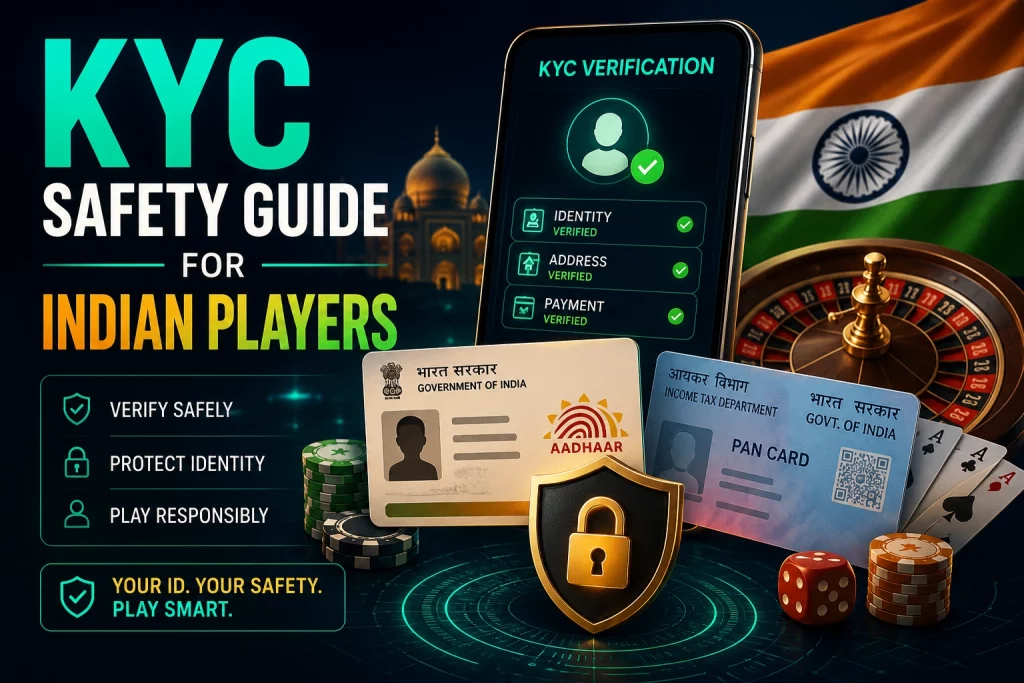
Why KYC Matters for Indian Users
KYC stands for “Know Your Customer.” In regulated financial and digital-service contexts, it is used to confirm that a person is real, reduce fraud, prevent account misuse, and support anti-money-laundering controls. In gambling-related environments, KYC may also be used to check age, prevent duplicate accounts, review payment ownership, and reduce suspicious activity. These purposes can be legitimate, but users should still examine how clearly the platform explains them.
A trustworthy service usually explains what documents are required, why they are needed, how long review may take, whether documents are encrypted, and how user data can be deleted or corrected. A weaker platform may use vague wording, request excessive documents, hide ownership details, or pressure users into uploading sensitive files before basic information is available. That difference matters. Verification should never feel like a blind handover of identity.
For Indian users, the most sensitive issue is document exposure. PAN details, Aadhaar-linked identity information, bank statements, UPI references, mobile numbers, and address records can be misused if handled carelessly. A platform that asks for such information should provide clear privacy documentation, visible support channels, and a consistent explanation of how the account review works. If the information is missing or written in confusing language, that is a serious warning sign.
What EN 365 Readers Should Check Before Sharing Documents
Before sharing identity documents with any gambling-related platform, Indian users should slow down and check whether the request is proportionate. A basic account should not automatically require every sensitive document at once without explanation. If a platform asks for PAN, Aadhaar-related identity information, a selfie, bank proof, address proof, and payment screenshots before providing clear terms, the user should treat that as a risk signal.
The first check is ownership transparency. A real platform should make it possible to identify who operates the site, which company controls data, where support is located, and what dispute process exists. The second check is document handling. Users should look for plain explanations of encryption, retention periods, data access, and deletion rights. The third check is consistency. If the terms, privacy page, payment page, and support replies all describe verification differently, the platform may not have a stable compliance process.
This is also where internal site navigation matters. A responsible information page should guide readers toward safer research paths rather than pushing them directly into action. On an EN 365 page, links to account guidance, payment safety, responsible use, and user protection resources should appear naturally, not as aggressive conversion prompts. KYC content should help readers evaluate risk before they move further into any account-related process.
KYC Documents and Data Exposure Risks in India
KYC verification becomes more serious when a platform moves from basic account details to identity documents. For Indian users, the most common risk is not only that a document may be rejected or delayed. The deeper issue is data exposure. PAN details, Aadhaar-linked identity information, address proof, bank references, UPI records and mobile numbers can all connect to a person’s financial and legal identity. That is why KYC should be treated as a privacy checkpoint, not as a simple account step.
A careful EN 365 reader should ask whether the requested document is necessary for the stated purpose. A platform may reasonably need to confirm age, identity consistency or payment ownership in certain regulated contexts, but it should not use vague language to collect more information than required. If a site asks for multiple documents without explaining why each one is needed, the request becomes harder to trust.
The same logic applies to any Bonus page or promotional offer connected to account verification. A promotion should never pressure a user into uploading sensitive documents quickly. If the offer language creates urgency while the privacy policy remains unclear, the user should pause. Strong platforms separate marketing from identity checks. Weak platforms often mix both together, making users feel that document submission is just another step toward a reward.
Verification Pressure and Responsible Decision-Making
One of the most important signs to watch is pressure. KYC should not be framed as an emotional or urgent decision. If a platform suggests that a user must upload documents immediately to avoid losing access, missing a promotion or unlocking a limited offer, the process is being mixed with conversion pressure. That is not a strong safety signal.
A responsible verification process gives the user time to read, compare and decide. It does not hide privacy terms behind account walls. It does not make basic explanations available only after sensitive files are submitted. It also does not change requirements midway without a clear reason. In India, where digital identity information can be closely connected to financial access, this matters even more.
The safest reading approach is to treat every KYC request as a data transaction. The user gives something valuable: identity evidence. In return, the platform should provide clarity, accountability and a documented reason for the request. If that exchange is unbalanced, the user should not treat the process as routine.
How to Read the Chart Without Overtrusting It
The chart is not a legal rating and not a platform endorsement. It is a visual way to show how different verification patterns feel from a user-safety perspective. A safer review pattern usually has stronger privacy clarity, clearer document control, visible support and lower pressure. A riskier pattern often does the opposite: it asks for more, explains less and pushes the user to act quickly.
This kind of evaluation is especially useful for Indian readers because KYC is not only about account approval. It can involve identity records, financial details and long-term data exposure. A site may appear smooth on the surface, but the real test begins when it asks for documents. At that moment, design quality matters less than transparency, consistency and user control.
Users should also pay attention to the difference between general gaming content and identity collection. A page about Games can be informational and low-risk if it does not request private documents. A verification page is different because it asks the user to transfer sensitive information. That change in context should immediately raise the level of caution.
Practical Privacy Questions Before Uploading Anything
Before submitting identity material, users should ask whether the platform explains the minimum required document, acceptable masking rules, data storage period and deletion process. If the platform gives no answer, the user should not fill the gap with assumptions. Silence is not proof of safety.
Another useful question is whether the platform gives the same answer across its terms, privacy page and support messages. If the account page says one thing, the privacy policy says another and support gives a third explanation, the verification process may not be stable. Consistency is one of the simplest ways to judge whether the service has a real compliance structure or only a surface-level form.
Indian users should also consider whether the platform provides enough information before asking for documents. A privacy-aware service does not force users to create deep account access just to read core rules. It makes essential safety information visible early, in plain language, and keeps document requests proportionate to the actual review.
Identity Checks, Payment Consistency and Account Safety
KYC verification is often discussed as if it were only about documents, but the account context around those documents matters just as much. A platform may ask for identity proof, but it may also compare that information with payment records, account activity, device patterns, and communication history. For Indian users, this means KYC should be evaluated as part of a wider account-safety process rather than a single upload screen.
A safer review process is usually consistent. The name on the account, the payment method, the declared country, and the support record should follow the same logic. A riskier process feels unclear: one page asks for one document, another page implies a different rule, and support gives vague answers. When money, identity, and personal data are involved, inconsistency should not be ignored.
This is where users should also be cautious with any Sign up flow that appears too quick or too vague. A fast account opening process may feel convenient, but if the platform gives almost no information about later verification checks, the user may face uncertainty at the most sensitive stage. A credible site should explain identity review expectations early enough for users to make an informed decision.
Why Payment Ownership Should Be Treated Carefully
Payment ownership checks are one of the most sensitive parts of KYC. A platform may want to confirm that an account holder is using payment details that belong to the same person, but the way this is handled matters. A clear process focuses on consistency and fraud prevention. A weak process may ask for broad banking evidence without explaining what is being checked or how the file will be protected.
Indian users should be especially careful with screenshots, bank statements, UPI references and transaction records. These documents can reveal more than the platform actually needs. A user may unintentionally expose balances, unrelated transactions, account numbers, names of third parties, and contact details. A privacy-conscious service should explain whether masking is allowed and what information should remain visible.
This is also where an Apк page or mobile access route needs careful review. Mobile convenience can make sensitive steps feel routine because uploading a file from a phone is fast. But speed is not the same as safety. If the mobile interface encourages quick submission without making privacy terms easy to read, the user should treat the process more cautiously.
Data Minimisation as a Trust Signal
Data minimisation means collecting only what is necessary for a specific purpose. In KYC contexts, this principle is important because identity documents contain far more information than a platform may need for a limited review. A safer platform should define the purpose clearly and avoid asking for excessive material.
For example, if the issue is payment ownership, the platform should not automatically need unrelated identity files unless it explains why. If the issue is address consistency, the user should know which proof is accepted and whether unrelated details can be hidden. If the issue is account security, the platform should explain the reason for the review rather than presenting the request as an unexplained demand.
This approach helps readers separate professional verification from broad data collection. A platform that respects data minimisation appears more accountable because it does not try to gather everything “just in case.” A platform that collects too much too early may be creating unnecessary exposure for the user.
Support Quality and KYC Transparency
Support quality becomes more important during verification than during ordinary browsing. A platform may have polished menus, attractive promotions and a large content library, but KYC shows whether its operational side is organised. If users cannot get clear answers about document requirements, review time, data handling or escalation routes, the account process is not transparent enough.
A useful support reply should be specific. It should identify what is needed, why it is needed, how the user should submit it safely, and what happens after review. It should not rely only on generic language such as “send documents for security reasons.” That phrase may be common, but by itself it does not explain the user’s risk or the platform’s responsibility.
For EN 365 readers, the practical lesson is simple: do not judge a platform only by how quickly it opens. Judge it by how clearly it behaves when identity, payment and privacy questions become relevant. A platform that can explain its KYC process in plain language is easier to evaluate than one that hides behind vague compliance wording.
Final KYC Safety Checklist for Indian Users
KYC verification should end with a clear decision: either the platform provides enough transparency to be evaluated responsibly, or the user should treat the process as too risky. For Indian readers, the safest approach is not to rush through document upload because the site looks familiar, uses local payment terms, or presents itself as convenient. Identity data deserves a higher level of caution than ordinary browsing.
A responsible review should include legal awareness, privacy checks, payment consistency, support quality and account-control options. If these elements are visible, written clearly and easy to access, the user can make a more informed judgment. If they are missing, hidden or inconsistent, the platform should not be treated as reliable simply because it offers Slots or other casino-style entertainment.
KYC also connects directly to long-term account control. Users should know whether they can update personal details, request correction of stored data, close an account, contact support about verification issues and understand how long documents may be retained. Without those answers, document submission becomes a blind trust exercise rather than a transparent process.
Reading KYC Terms Without Missing the Main Risk
KYC terms can look technical, but the core question is simple: does the platform explain its responsibilities as clearly as it explains the user’s obligations? Many weak verification pages focus heavily on what the user must provide but say very little about storage, review limits, complaint handling or data deletion. That imbalance is a warning sign.
A strong KYC page should not hide behind broad wording. It should say what types of documents may be requested, what conditions trigger a review, how the user can contact support, and whether the same identity must match payment records. It should also explain what happens if documents cannot be accepted. Rejection rules matter because users should not be left guessing after sharing sensitive files.
This is especially relevant when users reach KYC from content pages about Games or account activity. Entertainment pages may feel casual, but verification is not casual. Once identity documents are involved, the user is no longer only browsing a gaming website. They are entering a privacy-sensitive process where every uploaded file may carry long-term consequences.
Responsible Gambling and Identity Protection
Responsible gambling content should not be limited to spending limits or time reminders. For Indian users, identity protection should also be part of responsible decision-making. A person who feels rushed, confused or pressured should not submit personal documents simply to continue using a platform. Good responsible-use guidance should encourage users to slow down, read terms and protect their information.
A responsible EN 365 information page can connect KYC awareness with broader user control. Readers should know how to find account limits, support routes, safer-use tools, privacy terms and educational resources. These sections should be easy to reach through clear internal navigation, including a visible FAQ area for common safety questions and a separate Links section for official resources or external awareness pages.
The safest tone is practical rather than promotional. KYC should not be described as a barrier to overcome. It should be described as a point where the user decides whether the platform deserves access to sensitive information. If the answer is uncertain, caution is the stronger choice.
Final Review Before Any Document Upload
Before any document is shared, users should confirm five things: the purpose of the request, the minimum document needed, the privacy policy, the support route and the legal context. If one of these areas is unclear, the process is incomplete from a safety perspective. A user should not rely on design quality, fast loading speed or promotional language as proof of trust.
The most important rule is proportionality. A platform should not ask for more data than it can clearly justify. It should not combine verification with urgency. It should not make users feel that privacy questions are an inconvenience. When a site treats user questions seriously, that is a better signal than any marketing claim.
For EN 365 readers in India, the conclusion is straightforward: KYC verification is not just an account step. It is a privacy, identity and legal-awareness checkpoint. The safest approach is to evaluate the platform before the upload, not after the document has already been submitted.






Comments