

EN 365 Deposits Safety & Payment Awareness for Indian Users
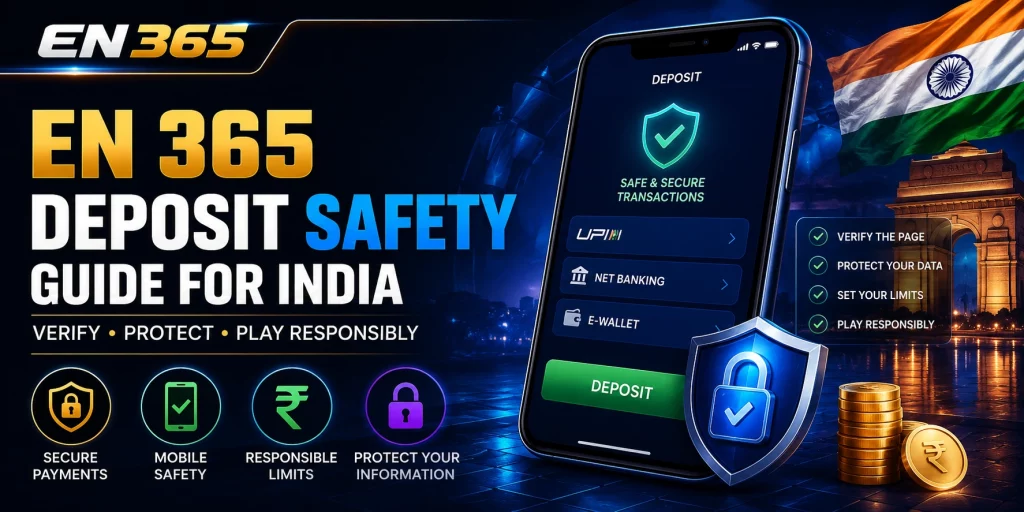
The EN 365 Deposits page should be written as a payment-awareness and safety guide rather than a transactional instruction page. For Indian users, the important question is not how quickly money can move into an entertainment platform, but how clearly payment risks, account checks, transaction limits, device security, and responsible-use boundaries are explained before any financial decision is considered. A strong page should help users understand the payment environment, recognise warning signs, and evaluate whether a platform presents financial information transparently.
This page should not push users toward funding an account. It should act as a practical review of what a responsible deposit-related page should contain: clear account access information, visible payment safety notes, transparent limits, mobile security advice, and links to official financial-awareness resources. That editorial approach makes the page more useful and more credible for an India-focused EN 365 audience.
A user may arrive on this page after seeing a Login area, reading about a Bonus, checking Sign up information, comparing the App, browsing Slots, exploring Games, opening the FAQ, or following internal Links. Those navigation paths should be presented as site-structure references only. They should not be used as pressure points or encouragement to make a transaction. A professionally written deposit-awareness page keeps the user informed before any action.
Payment Awareness and First User Impression
The first screen of a deposit-related page should not feel aggressive. It should make the page’s purpose clear: payment safety, account verification, responsible limits, and transaction transparency. If the page opens with flashing payment prompts, oversized action buttons, or urgency language, it creates distrust. A better approach is calm structure, readable explanations, and clear separation between information and action.
For Indian users, payment awareness has specific practical importance. Many people use mobile-first payment habits, UPI-linked services, bank apps, and digital wallets in daily life. That convenience can create risk if a website does not explain security boundaries properly. Users should never be encouraged to share OTPs, UPI PINs, card PINs, CVV details through chat, screenshots, or third-party messages. A serious EN 365 payment page should state this clearly.
The page should also explain that payment method availability, processing times, limits, and verification requirements can vary. Instead of promising instant movement or guaranteed access, the page should guide users to check official account information, confirm displayed details, and avoid transactions when page data looks inconsistent. This is a better trust signal than promotional language.
Account Checks Before Any Payment Decision
A deposit-awareness page should explain basic checks users should make before considering any payment-related action. The account area should be accessible through secure browsing, the user should recognise the domain, and the page should not request sensitive credentials outside normal protected account flows. If a user sees unusual redirects, spelling errors, fake support messages, or unexpected payment instructions, the safest response is to stop and verify through official support channels.
Device security also matters. Indian users often access entertainment sites from shared networks, public Wi-Fi, budget smartphones, or browsers with saved credentials. The page should encourage general digital hygiene: use updated browsers, avoid public Wi-Fi for financial activity, keep device locks enabled, and never approve payment prompts that appear outside the expected context.
A responsible EN 365 page should also avoid presenting payment as the natural next step after registration. Account creation, identity checks, responsible-use settings, and review of terms should come before any financial decision. This makes the page more transparent and reduces impulse-driven behaviour.
Mobile Payment Safety
Mobile payment safety should be one of the strongest sections on an EN 365 deposit-awareness page. Smartphones make payments convenient, but convenience can reduce caution. A user may react quickly to a prompt, approve an action without reviewing details, or follow a message that looks familiar but is not official. The page should slow that process down by explaining what to check.
A careful user should verify the site address, avoid payment links received through unofficial messages, and never complete financial actions while distracted. If a page requests unexpected information, reloads into a strange domain, or shows inconsistent names, the safest response is to stop. A trustworthy payment-awareness page should make that advice visible.
The page should also remind users that secure payments are not only about the platform. Device condition, browser updates, network security, and personal data habits all matter. If a phone is compromised, shared, or filled with risky apps, any payment-related activity becomes less safe. This is practical information that adds real value to the article.
Responsible Deposit Positioning
Responsible deposit positioning means the page should explain risk before convenience. A user should understand limits, verification, payment safety, and account control before seeing any transaction-related action. The page should never make deposits feel casual or automatic.
A better EN 365 page treats payment as a serious decision. It explains that users should set personal limits, avoid repeated transactions, and pause if the activity feels impulsive. The language should be firm but not dramatic. The purpose is to support control.
The strongest version of this page would feel like a financial-safety guide inside an entertainment site. It would not hide payment information, but it would frame it carefully. That balance makes the page more credible for Indian users and more aligned with responsible content standards.
Deposit Risk Timeline and Payment Decision Flow
A responsible EN 365 deposit-awareness page should explain the payment decision as a sequence, not as a single button click. Indian users should understand what comes before any transaction, what should be checked during the payment screen, and what signals may indicate that the process is unsafe. This makes the page more useful than a standard deposit guide because it teaches users how to assess risk before acting.
The strongest approach is to divide the flow into clear stages: account access, page verification, payment-method review, limit awareness, confirmation check, and post-transaction review. This structure helps users slow down and notice details that may otherwise be missed on mobile. A trustworthy page should never make financial action feel automatic.
For Indian users, this matters because digital payments are fast and familiar. UPI, bank apps, cards, and wallet-style services can make transactions feel routine, but speed should not replace caution. A serious EN 365 page should remind users to verify every payment screen, avoid unofficial messages, and never approve requests that appear outside the expected account context.
The chart shows the core priorities of deposit awareness. Data safety carries the highest value because users must never share OTP, UPI PIN, card PIN, CVV, or banking credentials through unofficial channels. Page verification and mobile security are also critical because most payment-related mistakes happen when users move too quickly through familiar screens.
Common Mobile Payment Risk Signals
A deposit-awareness page should explain risk signals in plain language. If a user sees an unexpected redirect, a payment name that does not match the platform context, a request to share OTP or PIN outside the payment app, or a message pressuring immediate action, the safest response is to stop. These signals are more important than speed or convenience.
Users should also be cautious with payment screenshots. Screenshots can reveal transaction identifiers, partial account details, names, or other sensitive information. A serious support page should not ask users to send sensitive financial screenshots through unsecured channels. If support verification is needed, it should be handled through protected official account systems.
Responsible Limits and Personal Control
Responsible deposit awareness is not only about avoiding fraud. It is also about personal control. Users should understand that financial activity on entertainment sites can become risky when decisions are rushed, repeated, or emotionally driven. The page should encourage users to set limits, pause before acting, and avoid using funds needed for essential expenses.
A strong EN 365 page should make this message normal rather than hidden. Payment-related information should sit beside reminders about budget awareness, account control, and stopping when activity no longer feels controlled. This makes the page more credible and more useful for Indian users.
Editorial Assessment of Deposit Safety
The EN 365 deposit-awareness page becomes stronger when it treats payments as a serious decision. The timeline format helps because it breaks the topic into practical checkpoints: verify the page, review details, pause before confirmation, protect sensitive data, understand limits, and use official awareness sources.
This approach keeps the page informative without turning it into a transaction guide. It gives users the structure they need to assess payment-related information safely and responsibly.
Deposit Page Verification and User Control
The third section of the EN 365 deposit-awareness page should focus on verification discipline. A user should never treat a payment-related screen as routine simply because it looks familiar. Every financial step needs a pause: check the page, review the displayed information, confirm the account context, and avoid any prompt that asks for sensitive details outside a protected payment flow.
For Indian users, this matters because digital payments are fast and often completed on mobile. Speed is convenient, but it can reduce attention. A responsible deposit page should help users slow down and recognise when something does not look right. If a payment page uses unclear labels, redirects unexpectedly, or creates urgency, the safest response is to stop and verify.
A strong EN 365 page should also explain that deposit-related content must not pressure users into repeated transactions. Payment awareness is not only about fraud prevention. It is also about personal limits, budget control, and the ability to pause before making any financial decision.
Mobile Verification Habits
Mobile verification should be treated as a practical habit, not an advanced security topic. A user should check the site address, review the payment screen, avoid switching between unknown links, and stop if the page suddenly asks for information that should remain private. These small checks reduce risk.
A deposit-awareness page should also warn against acting from pressure. Messages that suggest urgency, special access, limited-time payment windows, or unusual manual instructions should be treated carefully. A secure platform should not need users to bypass normal protected payment flows.
The best EN 365 content should teach users to separate convenience from safety. Fast payments are not automatically safer payments. The safest decision is often the one made after reviewing details slowly.
Responsible Limit Awareness
Limit awareness should be presented as part of payment safety. Users should understand that financial activity on entertainment websites requires personal control. A strong page should encourage users to set boundaries, avoid repeated transactions, and never use money intended for essential needs.
This section should avoid dramatic language. The goal is to make responsible behaviour normal. Users should feel that checking limits, pausing, and stepping away are ordinary parts of safe online activity.
For Indian users, this matters because mobile payments can make repeated actions feel frictionless. The page should restore that friction by encouraging review, budgeting, and conscious decision-making.
Editorial Verdict for Deposit Verification
The EN 365 deposit-awareness page becomes more credible when it treats payments as serious decisions. The vertical flow table gives the reader a structured checklist without turning the page into a transaction guide. Each step reinforces the same message: verify, protect data, slow down, and use official awareness resources.
This makes the article useful while keeping the tone responsible. It supports Indian users with practical safety information instead of pushing financial action.
Final EN 365 Deposit Safety Assessment
The EN 365 deposit-awareness page should finish with a clear message: payment-related decisions need verification, patience, and personal control. The page should not treat deposits as a routine click. It should explain that users need to check the page context, protect sensitive data, review limits, and avoid rushed mobile confirmations.
For Indian users, this final section should feel practical. Digital payments are fast, but speed can create mistakes. A responsible EN 365 page should help users slow down before approving any transaction-related prompt. It should also remind users that OTP, UPI PIN, card PIN, CVV, banking passwords, and private payment screenshots should never be shared through unofficial channels.
The chart shows the final priority balance for deposit-related safety content. Data protection carries the highest weight because payment security depends on keeping private credentials and transaction details protected. Page verification and mobile security also remain critical because most payment-related confusion happens when users move quickly through familiar screens.
Practical Deposit Safety Verdict
The practical value of this EN 365 page depends on whether it helps users stop and review before acting. A strong deposit-awareness page should not make payment feel like a casual continuation of browsing. It should explain that payment-related actions require page verification, device security, careful review, and personal budget control.
Users should treat unexpected redirects, unclear payment names, manual instructions, urgent messages, or requests for OTP and PIN details as warning signs. The safest response is to stop, avoid sharing information, and use only official support or trusted financial-awareness resources.
Responsible Payment Positioning
Responsible payment positioning means the page should discuss limits before convenience. Indian users should see clear reminders about budget boundaries, repeated transaction risks, and the importance of pausing when unsure. This wording should feel normal, not hidden.
The page should also avoid turning safety content into a promotional section. Payment awareness is a trust feature. It should help users understand risk, not reduce friction toward financial action.
Final Recommendation for EN 365
The EN 365 deposit-awareness page should be positioned as a safety-first guide for Indian users. Its strongest qualities are credential protection, mobile payment caution, official-resource awareness, page verification, and responsible limit control.
A complete version should feel calm, practical, and transparent. It should not instruct users to make deposits. It should help them recognise what safe payment-related information looks like and when to stop.
EN 365 Deposit Safety FAQ
This FAQ explains deposit-related safety awareness for Indian users, focusing on payment verification, mobile security, responsible limits, and protection of sensitive financial data.






Comments