
Problem Gambling Statistics India
Problem Gambling Statistics India: What the Numbers Can and Cannot Show
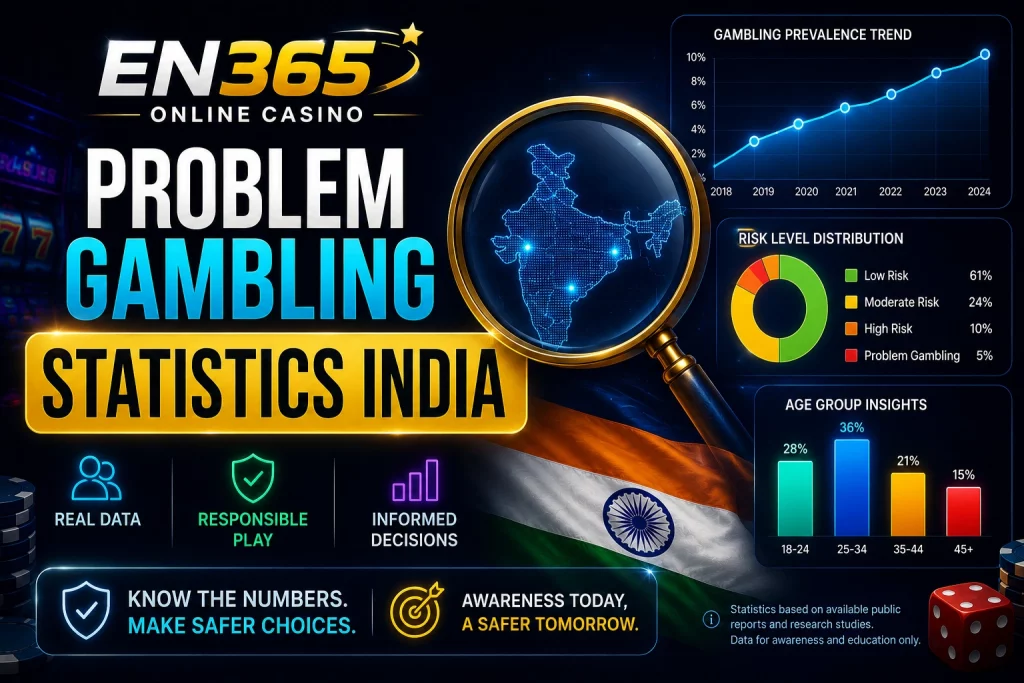
Problem gambling statistics in India need careful handling because the available data is uneven. India does not have one single national, regularly updated public dataset that measures gambling harm across every state, every age group, every gambling format, and every online-money-gaming channel. That means any serious article should avoid pretending that one simple percentage explains the whole country.
What is clear is that gambling harm has become a public-health and regulatory issue. The World Health Organization describes gambling harm as a global concern and notes that around 5.5% of women and 11.9% of men globally experience some level of harm from gambling. WHO also identifies online access and commercial promotion as factors that can increase exposure to gambling risks.
For India, the strongest conclusion is not that one exact national prevalence figure is settled. The stronger conclusion is that regional studies, clinical reports, media investigations, and policy responses all point in the same direction: online money gaming and gambling-related harms require stricter monitoring, better user protection, and clearer public data.
A Lancet Psychiatry commentary published in 2024 described gambling as a major public-health problem in India and noted that regional evidence suggests lifetime gambling prevalence may be as high as 46% in some studied populations. This does not mean 46% of all Indians have gambling problems. It means that local and regional evidence shows substantial exposure and that India needs broader, more systematic measurement.
Why India’s Gambling Statistics Are Difficult to Measure
India’s gambling data is difficult to interpret because gambling activity is fragmented. Some activity happens offline, some through informal networks, some through fantasy or gaming platforms, and some through online money-game environments. Legal status also varies by product type, state interpretation, and regulatory context.
Another issue is terminology. “Gaming,” “betting,” “gambling,” “fantasy sports,” “online money games,” and “real-money gaming” are often used inconsistently in public discussion. This makes statistical comparison harder. A survey that measures “online betting” may not be directly comparable with a clinical study that measures gambling disorder symptoms.
India’s 2025 online gaming law created a more formal distinction by prohibiting the offering, operation, facilitation, advertising, promotion, and participation in online money games. The official Act text states that the law covers e-sports, educational games, social gaming, and online money games while prohibiting the online money-game category.
This matters for statistics because future Indian datasets may separate legal game participation from prohibited money-game exposure more clearly. Older figures, however, may mix categories or use broader definitions.
India does not yet have one single public national gambling-harm dataset covering all states, formats, and online money-game channels in a consistent way.
Interpretation: avoid inflated certaintyPublished academic commentary highlights regional evidence suggesting high lifetime gambling exposure in some studied Indian populations.
View Lancet Psychiatry commentaryWHO reports that gambling harm affects a measurable share of the global population and identifies online access as a key modern risk factor.
View WHO gambling fact sheetThe 2025 online gaming law prohibits online money games and frames user protection as part of the national regulatory response.
View official Act PDFWhat Problem Gambling Means in Statistical Terms
Problem gambling is not measured only by how much money someone loses. Statistics often look at behaviour and harm together. These may include inability to stop, chasing losses, repeated borrowing, conflict with family, gambling during stress, missed responsibilities, financial damage, secrecy, and continued gambling despite negative consequences.
This distinction matters because two people can lose the same amount but experience different levels of harm. For one person, a small loss may be affordable and controlled. For another, the same amount may affect rent, studies, debt repayment, or family expenses. Good statistics therefore look beyond raw transaction values.
Online access can make this harder to measure. A user may move from one platform to another, use different payment methods, or hide activity more easily. A single account history may not show the full pattern. This is why public-health researchers often call for broader monitoring rather than relying only on platform-level numbers.
For EN 365, the safest editorial position is to explain statistics as risk indicators, not as promotional claims. Data should help readers understand harm patterns, not encourage deeper gambling activity.
Why Online Money Gaming Changed the Risk Profile
The risk profile changed because mobile access shortened the distance between impulse and action. A person no longer needs to travel to a venue or interact face-to-face before gambling-related spending begins. A private phone, saved payment method, and fast account access can make gambling behaviour more frequent and less visible.
India’s 2025 regulatory response reflects this concern. The government’s explanatory material around the online gaming bill described the legislation as designed to curb addiction and shield citizens from online money games while promoting e-sports and social gaming separately.
Statistics from other regions cannot be copied directly onto India, but they help explain why regulators and researchers focus on online access. A 2024 global systematic review found that, among adults internationally, 8.7% were classified as engaging in any-risk gambling and 1.41% in problematic gambling; it also found much higher problematic-gambling rates among people involved in online casino or slots gambling.
The Indian data picture is still developing, but the direction is clear: statistics should not only count participation. They should measure harm, access speed, financial damage, help-seeking, and repeat behaviour.
Interpreting Problem Gambling Data Without Exaggeration
Problem gambling statistics can be useful only when they are interpreted carefully. A number without context can mislead readers. India has different states, languages, income groups, access patterns, legal interpretations, and digital habits. A small regional study cannot automatically describe the entire country, while a global estimate cannot replace Indian evidence.
A responsible data page should therefore explain what each figure can prove and what it cannot prove. If a study measures gambling exposure in one region, it shows risk in that studied group. If a global review estimates problem gambling across many countries, it offers a benchmark, not an India-specific rate. If policy documents discuss online money-game harm, they show regulatory concern, not a full prevalence survey.
This distinction matters because gambling harm is often underreported. People may hide gambling activity from family, avoid discussing debts, or not identify their behaviour as a problem. Clinical and survey data may therefore miss people who never seek help.
A careful EN 365 page should avoid inflated certainty. The strongest approach is to combine academic evidence, public-health framing, legal context, and visible behavioural warning signs.
Reliable statistics can show patterns of risk, exposure, harm, help-seeking, and regulatory concern when the source and scope are clearly explained.
A single statistic cannot describe every Indian player, every state, every platform, or every gambling-related harm pattern.
Financial Harm Is Often More Visible Than Prevalence
When national prevalence data is incomplete, financial harm can still reveal risk patterns. Repeated deposits, debt, unpaid bills, borrowing, missed family obligations, and attempts to recover losses are concrete signs that gambling has moved beyond casual entertainment.
Statistics should therefore be read alongside behaviour. A low reported prevalence figure may still hide serious harm if people are unwilling to disclose gambling activity. In families where money is shared, one person’s gambling can affect several others, even if only one person appears in the data.
Financial harm can also appear gradually. A player may not lose a large amount in one session. Instead, they may make many small payments that become serious over a month. This is especially relevant in mobile-first environments, where payment friction is low.
A strong responsible-gaming page should explain these visible indicators instead of relying only on headline percentages.
Why Online Access Complicates Measurement
Online gambling and online money-game behaviour can be difficult to measure because activity is private, fast, and fragmented. A person may use several platforms, multiple payment methods, different devices, or informal access routes. This makes the full pattern harder to see.
Account-level data also has limits. One account may show moderate activity, while the same person may be active elsewhere. Payment records may show transactions, but not emotional pressure or loss of control. Survey answers may show behaviour, but not always the full financial impact.
This is why statistics should include both quantitative and qualitative signals. Numbers show scale. Behavioural indicators show harm. Legal responses show policy concern. Treatment and helpline demand show support need.
For India, the most responsible approach is to present statistics as part of a wider harm-prevention framework. Data should help users understand risk, not create false certainty.
How Problem Gambling Develops Over Time
Problem gambling rarely appears all at once. In many cases, the pattern develops gradually. A person may begin with occasional play, then move into repeated sessions, larger payments, emotional decisions, and eventually harmful behaviour that affects money, sleep, relationships, work, or study. Statistics can show broad risk, but timelines explain how that risk becomes personal.
The first phase is exposure. A user becomes familiar with gambling-like content, payment flows, promotional language, or quick-result formats. At this stage, the behaviour may still feel casual. The person may not experience obvious harm, but repeated exposure can make gambling more available mentally.
The second phase is escalation. The player returns more often, spends more time, increases deposits, or begins gambling during emotional states such as boredom, stress, anger, or loneliness. This is where risk becomes more visible. A session is no longer only entertainment; it starts filling an emotional or financial role.
The third phase is harm. This may include chasing losses, hiding activity, borrowing money, delaying responsibilities, or gambling after deciding to stop. At this point, statistics about prevalence become less abstract. The issue becomes a real-life pattern that requires stronger protection.
The person becomes used to quick entry points, repeated browsing, mobile notifications, payment prompts, or account-based gambling environments.
Statistical meaning: exposure is not harm, but it increases measurement relevanceGambling starts appearing more often in daily routine, sometimes during stress, late hours, boredom, or financial pressure.
Statistical meaning: frequency matters as much as participationThe player spends more than planned, extends sessions, changes limits, or starts treating gambling as a way to recover previous losses.
Statistical meaning: harm indicators begin to appearDebt, secrecy, family conflict, missed responsibilities, sleep disruption, and repeated failed attempts to stop show that gambling has become harmful.
Statistical meaning: support and intervention are neededWhy Behavioural Indicators Matter More Than Platform Labels
A problem gambling statistic becomes more useful when it is connected to behaviour. The label of the product is less important than what the person does with it. If a user repeatedly deposits, hides activity, loses sleep, borrows money, or returns after deciding to stop, the harm pattern is already significant.
This matters because gambling-related products and gaming categories can be described differently across platforms and jurisdictions. A user may not identify their activity as gambling even when money, chance, and repeated financial risk are involved. Statistics that rely only on self-identification may therefore undercount harm.
Behavioural indicators also help readers understand risk in practical terms. A person may not know whether they fit a clinical category, but they can recognise repeated loss chasing, secret payments, or difficulty stopping. These signs are more actionable than abstract percentages.
For EN 365, the responsible editorial approach is to explain data through visible patterns. Readers should understand what harm looks like before it becomes severe.
How Online Statistics Can Underestimate Hidden Gambling
Online gambling activity can remain hidden for a long time. A person may use private browsing, multiple apps, different wallets, or separate accounts. Family members may not notice the pattern until money problems or emotional changes appear. This creates a gap between actual harm and reported harm.
Survey data can also be limited by underreporting. Some respondents may minimize their behaviour because of shame, fear, or uncertainty about definitions. Others may not see their gambling as a problem even when clear risk signs are present.
Treatment data has another limitation. It only captures people who seek help. Many people experiencing gambling harm never contact a counsellor, helpline, or support service. This means help-seeking statistics can show demand, but they cannot fully measure total harm.
These limitations do not make statistics useless. They make cautious interpretation necessary. A serious page should explain uncertainty rather than hiding it.
Where EN 365 Should Place Statistics in User Education
Statistics should be placed near responsible gaming education, not used as decorative credibility signals. A data page should help users understand risk, identify warning signs, and know where to seek support. It should not make gambling appear safer by presenting numbers without context.
The FAQ section should explain common statistical questions: whether India has national gambling harm data, why figures differ across studies, how online gambling affects measurement, and what warning signs matter most.
The Links section should point readers toward official legal updates, mental health support, responsible gaming resources, and academic evidence. Data becomes more useful when readers can verify the sources and understand the limits of each figure.
A responsible information site should make one point clear: problem gambling statistics are not just numbers. They describe patterns that can affect real people, households, and financial stability.
Turning Statistics Into Prevention
Problem gambling statistics are useful only when they lead to prevention. A percentage, survey result, or policy document does not protect a player by itself. The value of data comes from what it helps people notice earlier: repeated deposits, loss chasing, hidden activity, financial stress, long sessions, and difficulty stopping.
For Indian readers, the most responsible interpretation is cautious and practical. India’s gambling-harm data picture is still developing, but the warning signs are already clear enough to justify stronger prevention. A person does not need to wait for national statistics to confirm personal harm. If gambling is affecting money, sleep, family, study, work, or emotional stability, the problem is already real.
Statistics should also guide platform education. EN 365 should use data to explain risk, not to normalize gambling exposure. The page should help readers understand where harm begins, what behaviours matter, and when support or self-exclusion becomes necessary.
A serious responsible-gaming section should therefore connect statistics with action. Numbers should lead to limits, support routes, financial protection, and safer decisions.
Participation data shows how many people encounter gambling activity, but harm data shows whether gambling affects money, time, mood, and daily life.
Prevention value: read numbers with contextLoss chasing, hidden deposits, repeated failed attempts to stop, and emotional play are more useful warning signals than casual participation alone.
Prevention value: identify risk earlierDeposit limits, time limits, cooling-off periods, and payment controls should be used before gambling starts affecting essential money or responsibilities.
Prevention value: reduce exposure before crisisIf ordinary limits fail, self-exclusion, helpline support, counselling, or trusted-person involvement becomes more appropriate than another private attempt.
Prevention value: escalate protection earlyWhat EN 365 Should Say About Statistical Uncertainty
A responsible EN 365 page should say plainly that Indian gambling-harm statistics are not complete enough to support one simple national conclusion. That does not make the topic weak. It makes careful explanation more important.
Readers should understand that limited data does not mean limited harm. Underreporting, stigma, private mobile access, multiple accounts, informal betting, and mixed terminology can all reduce visibility. Harm can exist even when it is not fully counted.
The safest editorial approach is to distinguish between confirmed evidence, regional findings, global benchmarks, and policy signals. These categories should not be mixed. A regional study should not be presented as a national rate. A global review should not be used as if it measured India directly. A government policy statement should not be treated as a prevalence survey.
This precision makes the page more trustworthy. It also prevents data from being used as shallow decoration. A responsible statistics article should show what is known, what remains uncertain, and why prevention still matters.
How Statistics Should Connect With Support Content
Statistics should guide readers toward practical help. If a person recognises warning signs while reading, the page should make the next step obvious. That step may be setting limits, taking a break, blocking access, contacting support, or asking someone trusted for help.
EN 365 should connect this article with responsible-gaming education, helpline resources, self-exclusion explanations, and financial safety guidance. Data should not stand alone. It should sit inside a prevention structure.
The FAQ section can answer questions about why figures differ, why India has limited national data, and what warning signs matter more than headline percentages. The Links section can guide readers to official legal updates, public-health information, and responsible-gaming resources.
A reader should leave the page with more than numbers. They should understand what the numbers mean for behaviour, money, and safety.
Final Position on Problem Gambling Statistics India
Problem gambling statistics in India should be handled with restraint. The data picture is incomplete, but the risk is real. Regional evidence, international public-health research, India’s 2025 legal response, and visible behavioural harms all support the need for stronger prevention.
The purpose of this page is not to claim certainty where the evidence is limited. The purpose is to explain the available context honestly and connect it to practical harm reduction. Good statistics do not exaggerate. They clarify risk.
For Indian players, the most important message is personal and practical: if gambling causes secrecy, stress, financial pressure, chasing losses, sleep disruption, or difficulty stopping, the harm is already meaningful. A person does not need to wait for a national prevalence number before taking action.
EN 365 should use this topic to strengthen responsible-gaming education. Statistics should help users recognise risk early, use limits before damage grows, and seek support when control is no longer stable.






Comments